
The durability of concrete with the look you want. For Austin homes, we add color, texture, and pattern to create surfaces that elevate a home's design without sacrificing strength.
Decorative concrete is not one product. Colored, textured and patterned concrete each solve a different problem, and most of those decisions have to be made before the truck arrives rather than after.
There are four common ways to get color into concrete, and they do not age the same way. Integral color is pigment mixed into the batch, so the color is the same at the surface and an inch down — a chip or a scuff exposes more of the same color rather than gray. Dry-shake color hardener is broadcast onto the fresh surface and worked in; it produces richer, denser color and a harder wearing surface, but only in the top layer. Acid stain reacts chemically with free lime in the slab for a translucent, variegated look that no two pours repeat exactly. Tinted topical sealers sit on the surface as a film and are the shortest-lived of the four.
For exterior flatwork in Austin we generally lead with integral color, often with a release agent or a color hardener to add depth on stamped work. It is the option that still looks intentional in year eight, which matters more outdoors than the extra richness a surface-only product buys on day one.
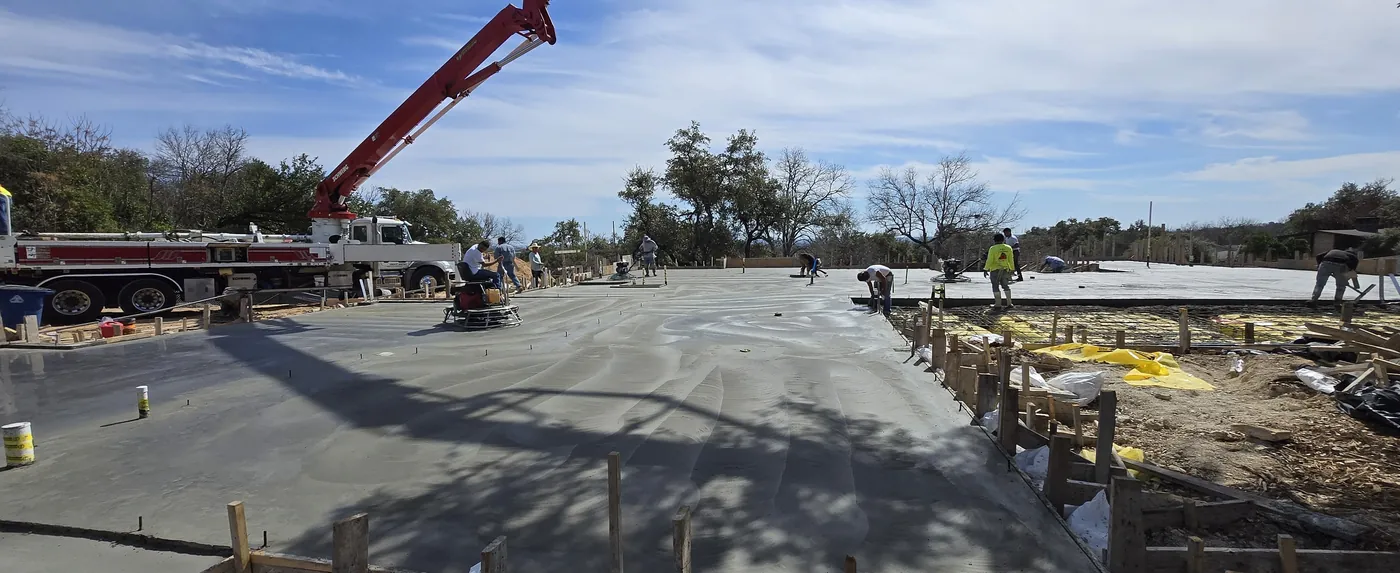
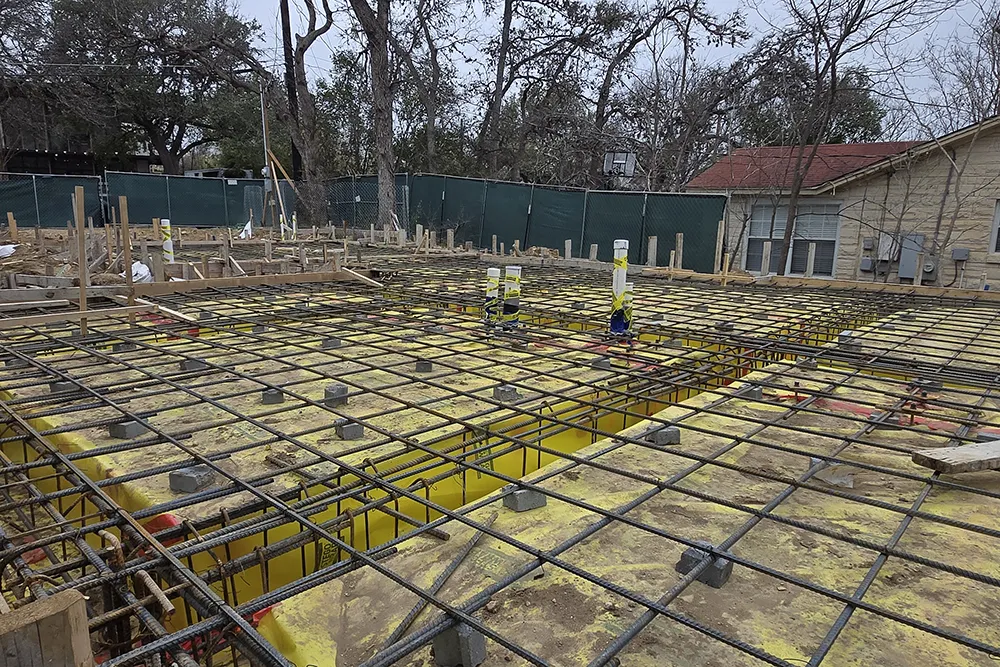
Stamping happens in a narrow window. The slab is placed and floated, integral color is already in the mix, a release agent goes down to keep the mats from sticking and to add a secondary accent tone, and then the texture mats are pressed in — all before the concrete sets up. Get the timing wrong in either direction and you either lose the depth of the impression or you tear the surface.
That is why stamped work is a scheduling problem as much as a finishing one, and why we build detailed pour schedules for larger and more complex decorative slabs rather than treating them like ordinary flatwork.
This is the question we get asked most, and the honest answer is that it depends on what you care about more — a continuous surface, or a repairable one.
Austin gives decorative concrete a harder life than most of the country. Months of direct summer sun fade pigment — the deeper and more saturated the color, the more obvious the change over time — so on full-sun patios and pool decks we steer toward mid-tone earth colors that age gracefully rather than dramatic darks that will not look the same in five years.
Surface temperature is the other Texas-specific consideration. Dark concrete gets genuinely hot underfoot, which matters on a pool deck people cross barefoot in August. Lighter integral colors and textured finishes both help.
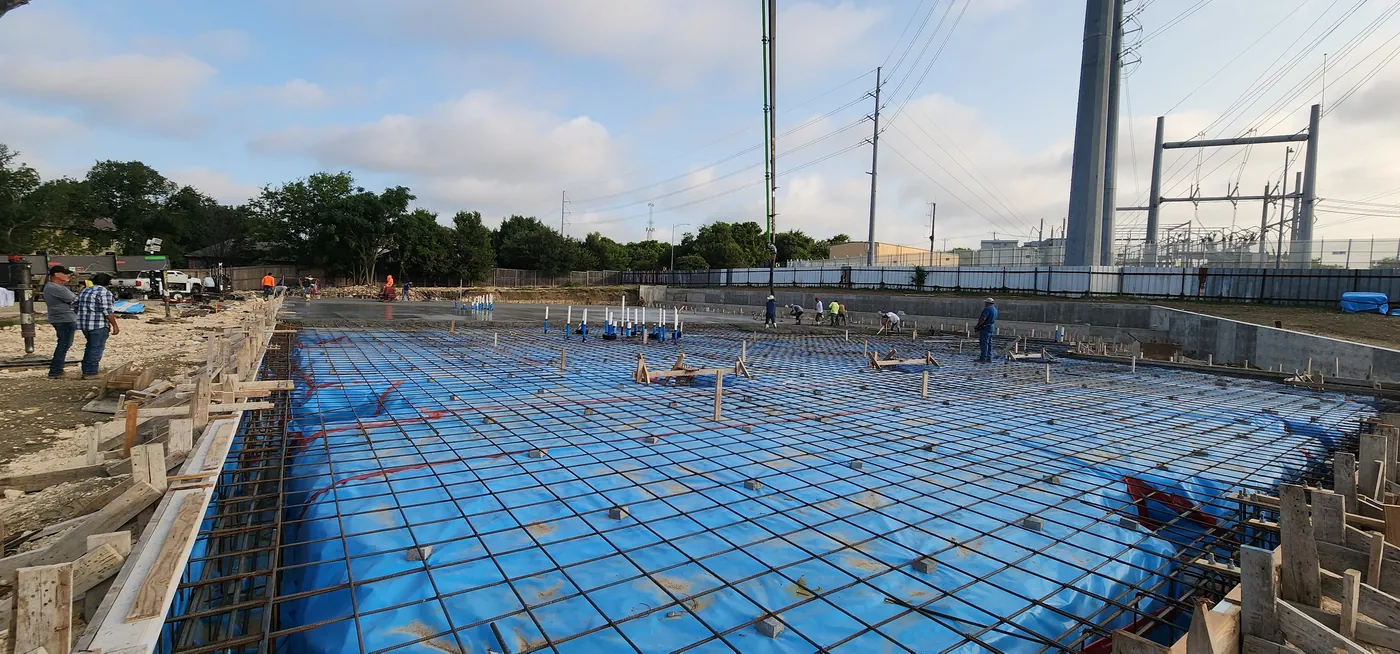
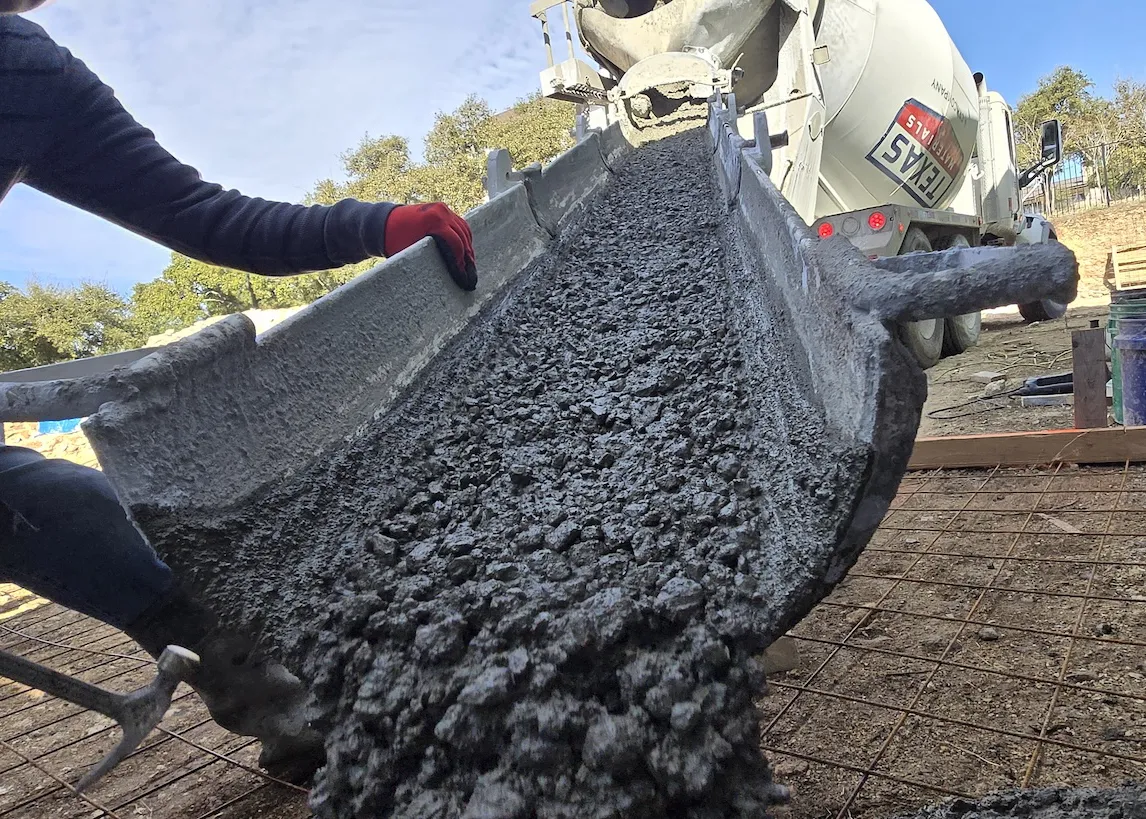
Plain broom-finished concrete can be left alone almost indefinitely. Decorative concrete cannot — the sealer is what keeps the color reading the way it did on handover, and sealer is a consumable.
Impervious cover is the other thing worth settling early. Austin caps how much hard surface a residential lot can carry, and a decorative patio, pool deck and walkway all count toward it alongside the driveway. That makes the decorative scope a planning decision, not a finishing decision.
We would rather have that conversation at the takeoff stage than have you find out at permit that the patio has to shrink. It is the same reason we quote from a measured takeoff rather than a rate per square foot.
Usually, installed — though the gap narrows as you add pattern and colour complexity. The more useful question is what you want when something goes wrong. Pavers are individually replaceable and flex with ground movement; stamped concrete is one continuous surface with no joints for weeds, but repairs are harder to make invisible.
Expect to reseal exterior decorative flatwork every couple of years, and sooner on surfaces that sit in full sun all day. The sealer is what holds the colour and resists staining, and it is a consumable rather than a one-time application.
Some, over years. Deeper and more saturated colours show the change most, which is why we steer toward mid-tone earth colours on unshaded patios and pool decks. UV-resistant sealers slow fade; nothing stops it entirely.
It can be when wet and sealed, so ask for a grit additive in the sealer on pool decks and any sloped surface. Lighter colours also matter here for a different reason — dark concrete gets genuinely hot underfoot in an Austin August.
Tell us about your project and we'll put together a detailed, dependable proposal.
Get a Free Quote Today