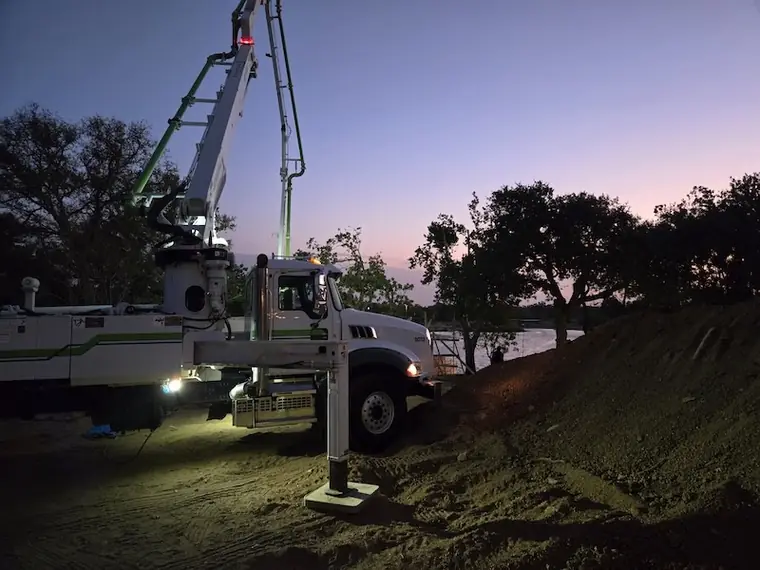
From land clearing to finished foundations, DB Concrete delivers precision concrete services for custom homes, builders, and large-scale projects across Austin and Central Texas.
Austin sits on a seam between two very different pieces of geology. East of I-35 the Blackland Prairie's deep, expansive clays swell when they take on water and shrink hard when they dry out. West of it the Edwards Plateau puts limestone within a few feet of the surface, sometimes within inches. The Balcones fault zone runs between the two, which is why two lots a mile apart — or occasionally two corners of the same lot — can call for completely different foundation systems.
That is the reason we do not quote a foundation type before reading the soils report and walking the site. A post-tension slab is the right answer where clay movement is meaningful and the slab needs to behave as one stiff plate. Pier and beam is right where you can reach competent rock, or where you are matching an existing raised structure. A conventional steel-reinforced slab is right where conditions genuinely allow it. The same logic runs all the way down to flatwork: a driveway poured without accounting for what is underneath it will crack more or less on schedule, no matter how good the finish looked on day one.
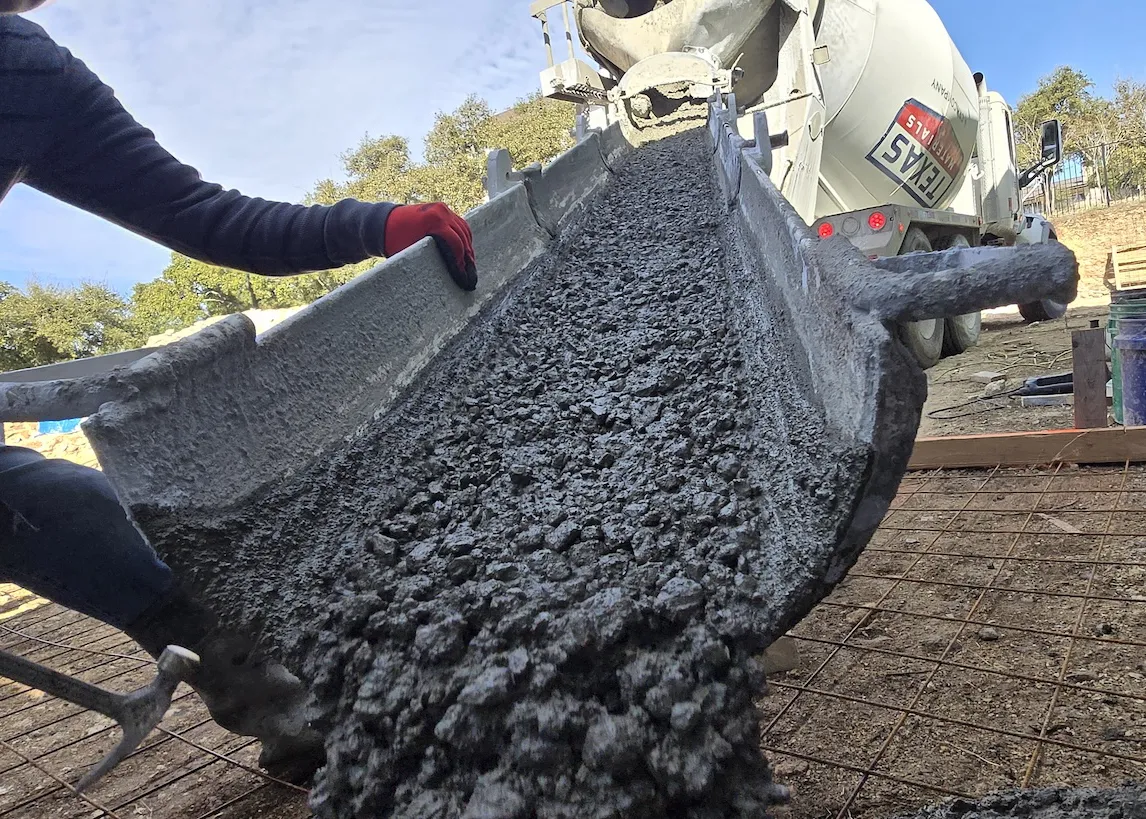
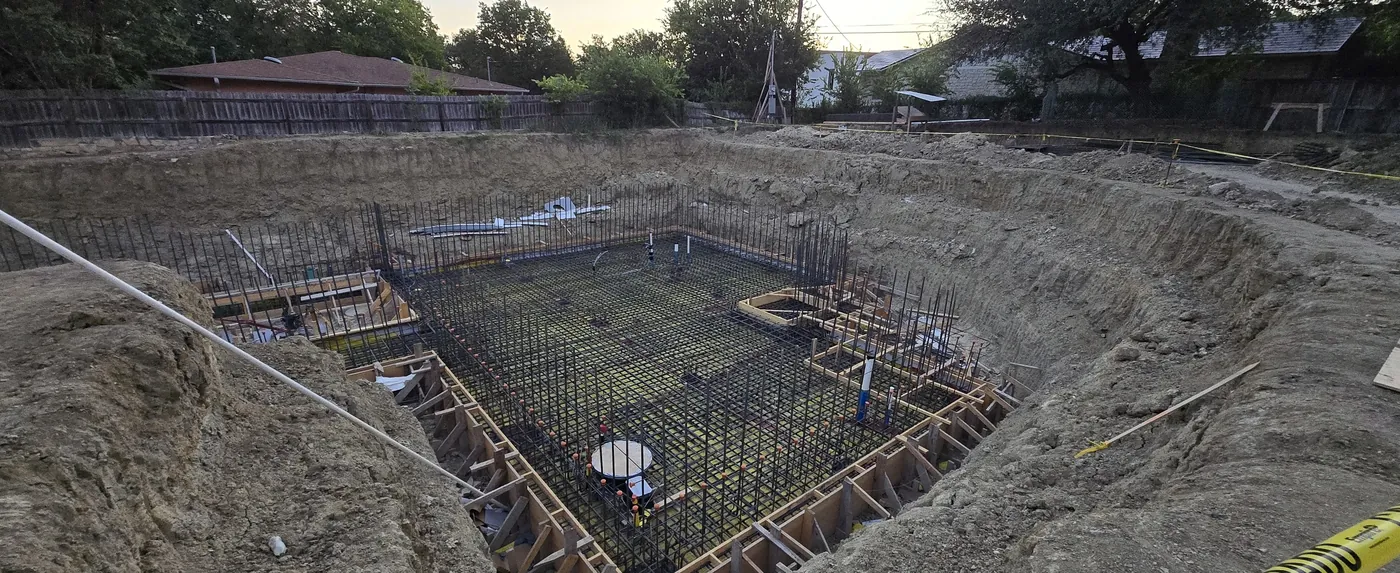
Most of our projects draw on more than one of these. A new custom home typically starts in sitework and finishes in decorative flatwork, with the structural pour in between.
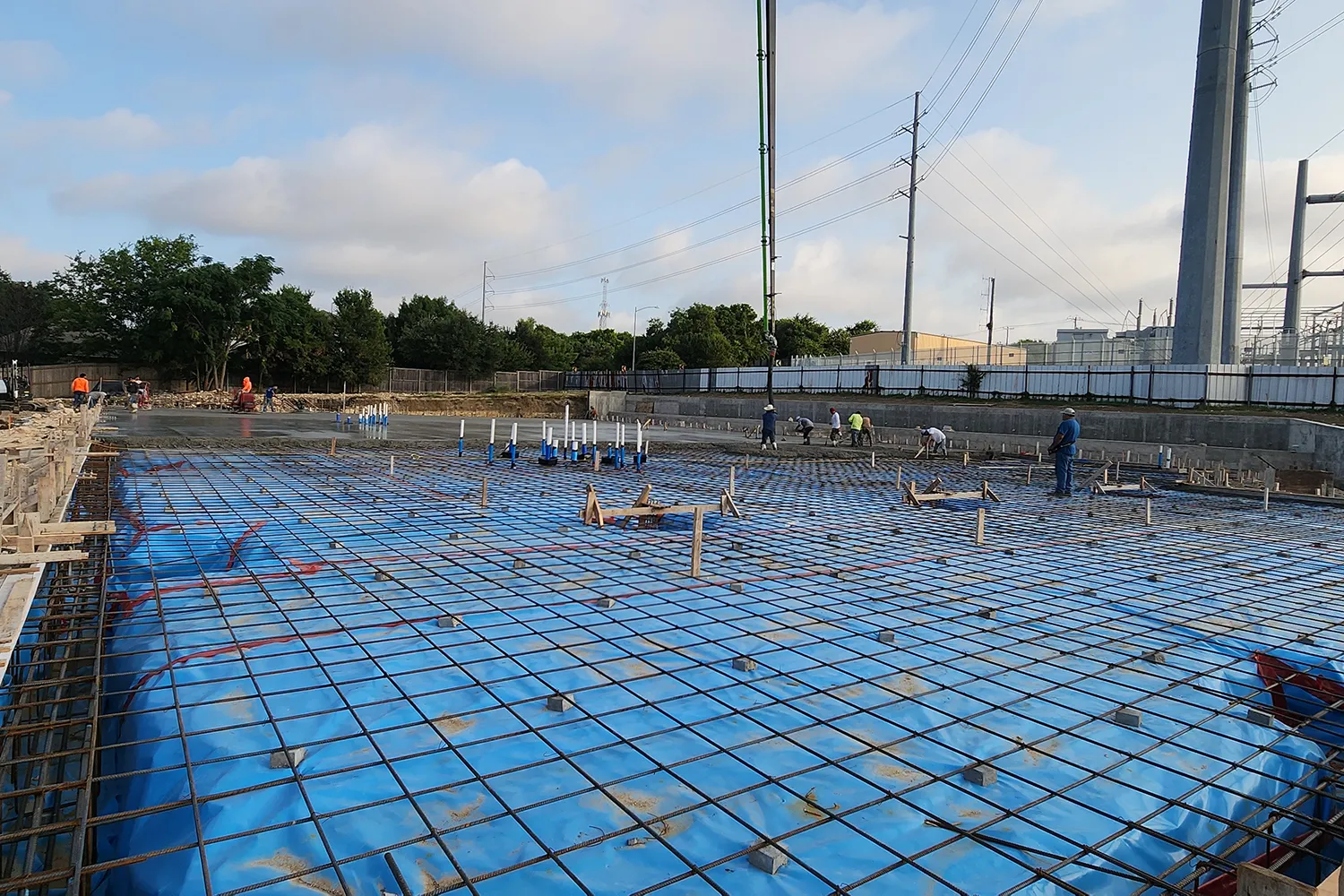
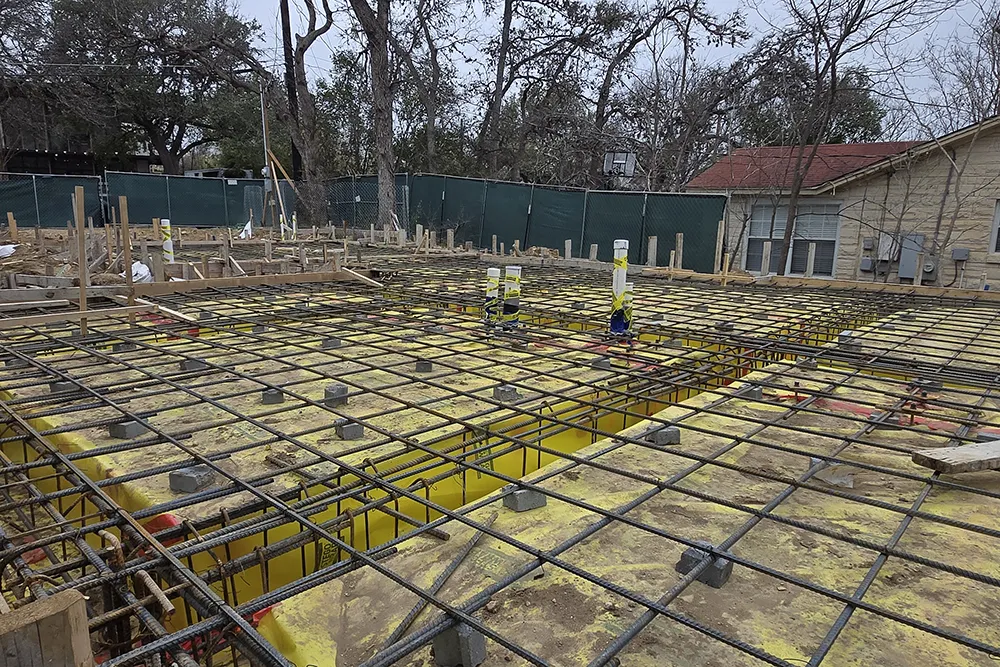
Most of our work comes through custom home builders in the Austin premium residential market, where the concrete package is on the critical path and every trade behind it is waiting. That shapes how we run a job: we coordinate plumbing rough-in, door thresholds and finish elevations with the rest of your trades before the pour rather than discovering the conflict afterwards.
We also work directly with homeowners on additions, replacement driveways, patios and pool decks — projects where there is no general contractor in the middle and you are relying on us to explain the tradeoffs plainly.
Two pieces of Austin regulation shape residential concrete more than anything else, and both of them get discovered late by contractors who do not work here regularly.
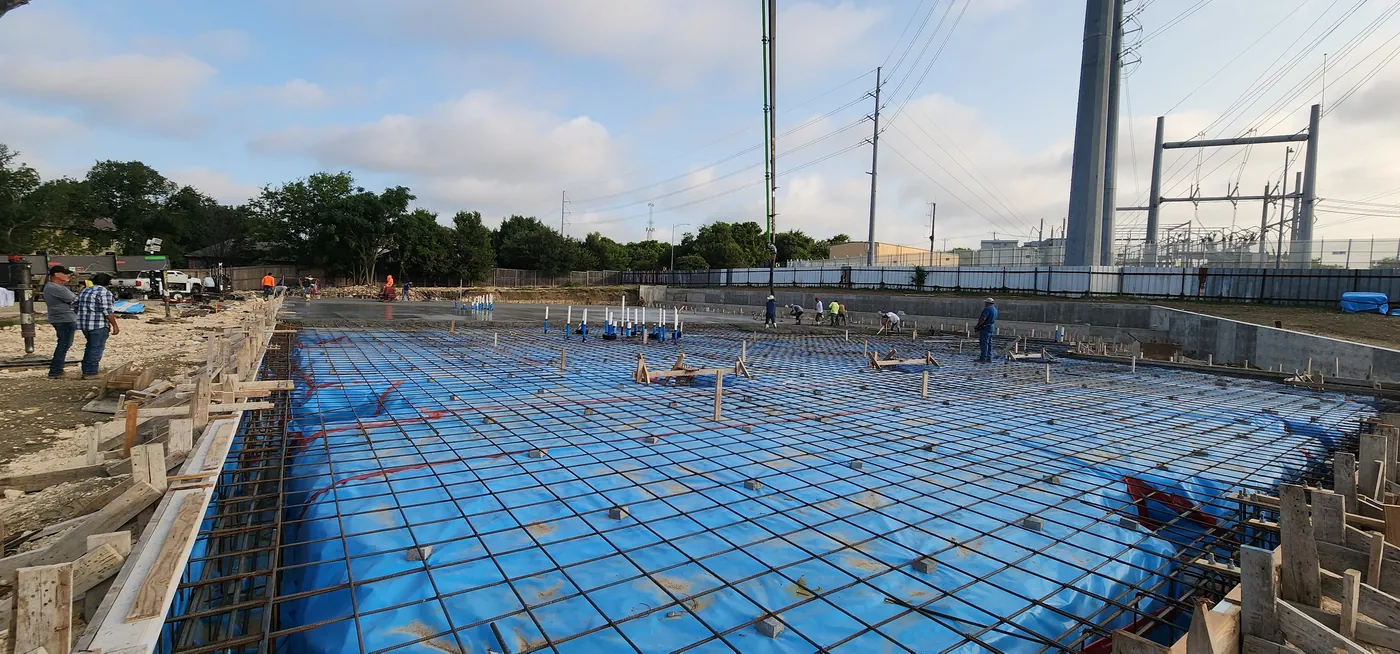
At DB Concrete, precision starts before we ever step foot on the job site. Our team uses industry-grade estimating software—updated quarterly with the latest material and labor pricing—to ensure every proposal is both detailed and dependable.
From foundations to flatwork, we generate highly accurate takeoffs that eliminate guesswork and help our clients budget confidently. On a builder's project that means a number you can carry into your own pro forma; on a homeowner's project it means no mid-job conversation about what the price did not include.
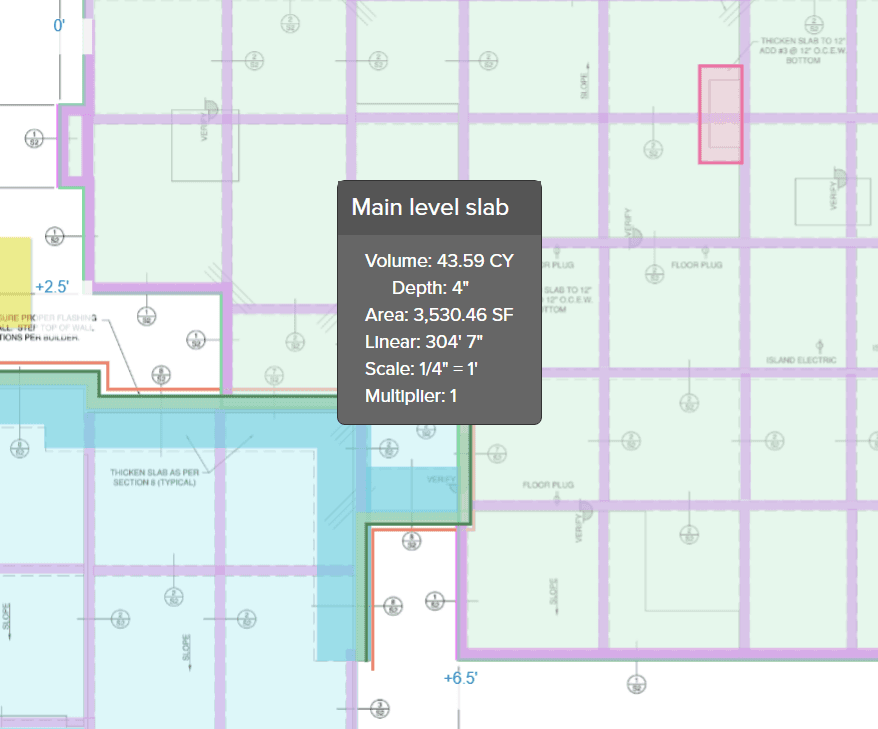
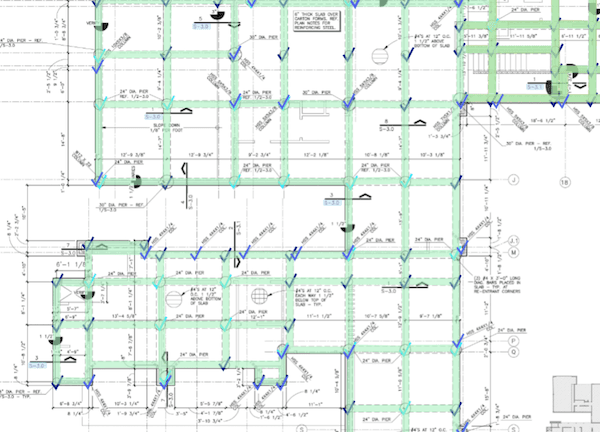
Austin spends a long stretch of the year above 95 degrees, and heat changes how concrete behaves before it ever reaches strength. Hot mix sets faster, which shortens the window for placing and finishing. High evaporation at the surface — driven as much by wind and low humidity as by air temperature — pulls water out of the slab while it is still plastic, which is where plastic shrinkage cracking comes from.
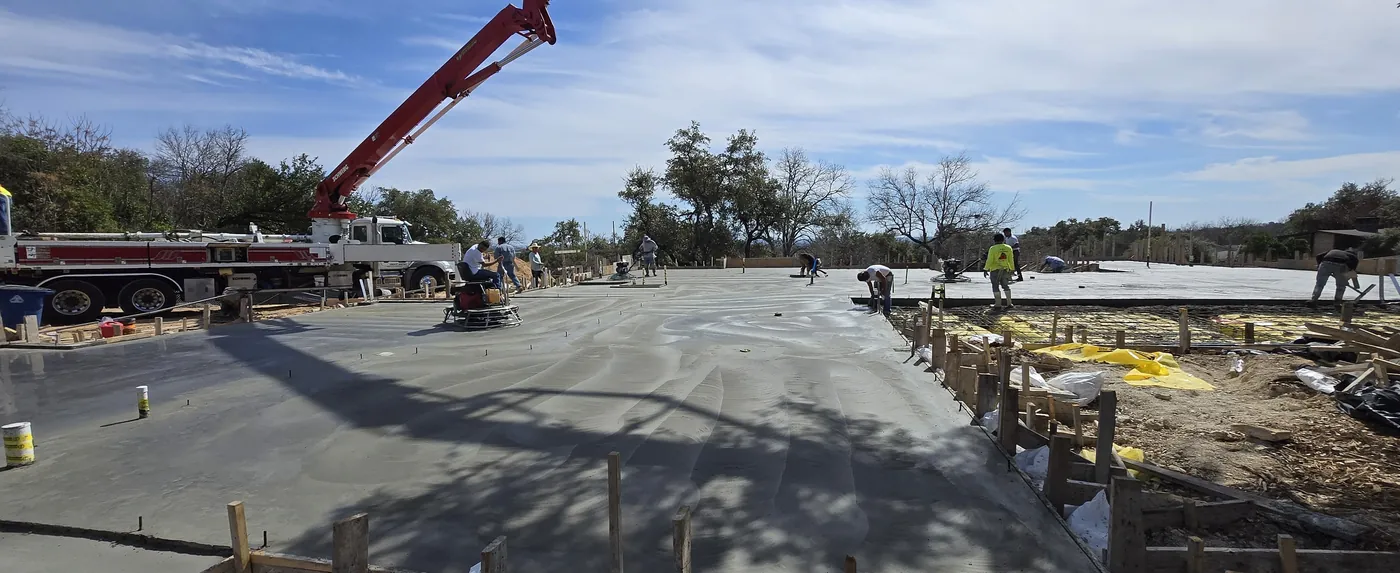
None of that is a reason to stop pouring in July. It is a reason to plan the pour: early starts, mix designs and admixtures suited to the conditions, enough crew on site to place and finish a large slab without falling behind it, and proper curing once it is down. On larger and more complex slabs the schedule is as much a part of the deliverable as the mix.
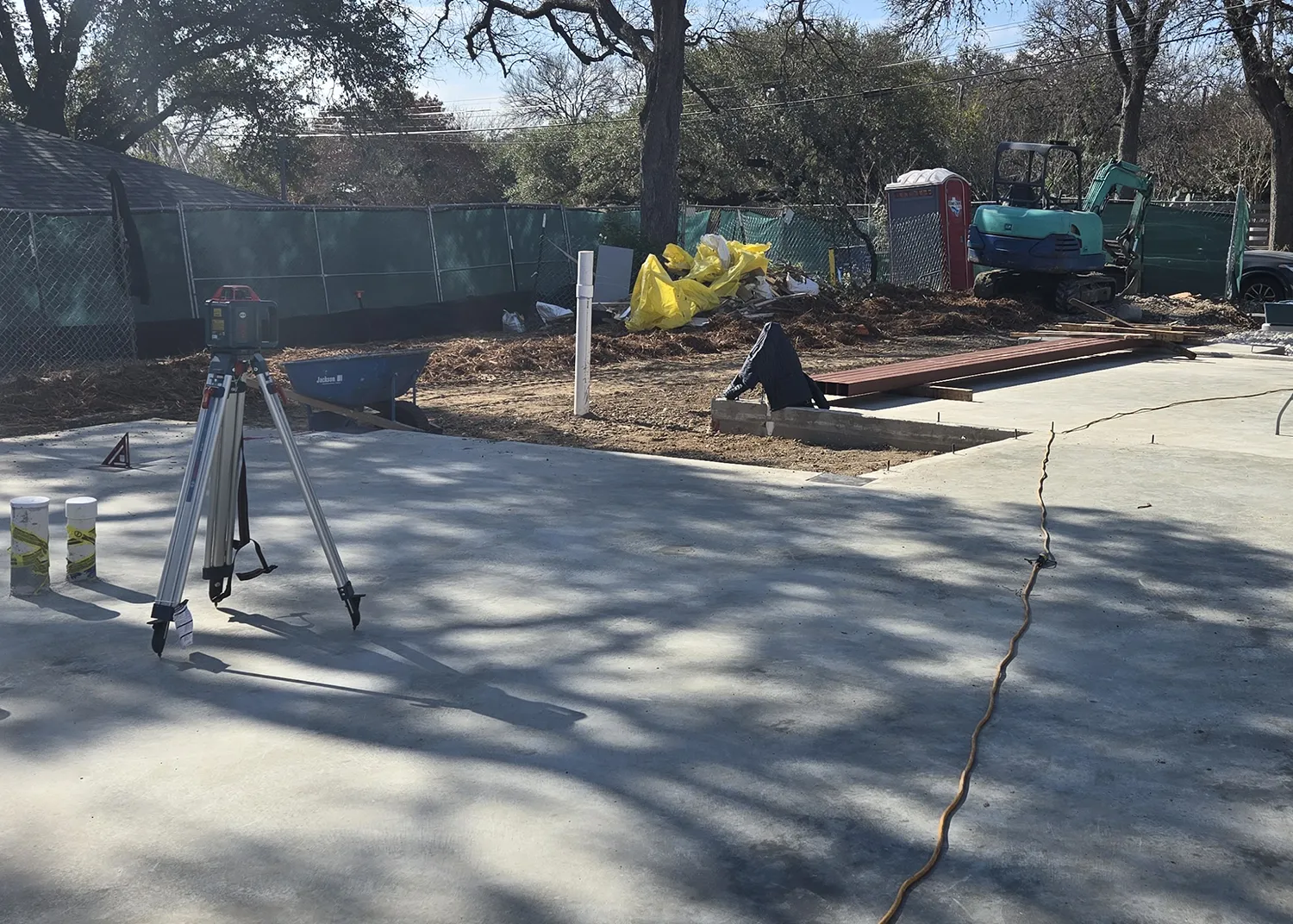
Access, existing structures, trees, and where water currently goes. On a new build we read the soils report before quoting a foundation type.
An accurate takeoff from estimating software updated quarterly for material and labor pricing — no guesswork, no surprise change orders.
ROW permitting where the scope requires it, plus coordination with your builder and the trades working either side of the pour.
Precise placement and finish, a clean site at the end of it, and a walkthrough to confirm the work meets your expectations.
Austin and the surrounding counties — Williamson, Burnet, Hays, Comal, Blanco and Caldwell. See the full service area, or start with the Central Austin neighborhoods we work in most.
Concrete for a century of building stock, from 1920s pier-and-beam to new custom slabs.
Concrete work inside Austin's oldest freedom colony and its historic district.
Foundations and flatwork for Old Enfield's 1910s estate lots.
Concrete for the revival-era homes platted from 1927 onward.
Concrete keeps gaining strength for about 28 days, but you do not have to wait that long for everything. You can usually walk on new flatwork after 24 to 48 hours, put normal cars on a residential driveway at around seven days, and run heavy vehicles or place heavy loads once it has reached its full 28-day strength. In Central Texas summer heat the early set happens faster, but the curing schedule does not change.
Rarely the concrete itself. The variables that move a number most are the site work below the slab, access for trucks and pumps, how much has to be demolished and hauled off first, the reinforcement the engineer specifies, and the finish. That is why we quote from a measured takeoff rather than a rate per square foot — a square foot of easy flatwork and a square foot on a tight sloped lot are not the same product.
It depends where the concrete goes. Private flatwork on your own lot often does not, though impervious cover limits still apply. Anything in the public right-of-way — a driveway approach, sidewalk, curb cut — needs a permit and a licensed right-of-way contractor. Foundations for new construction are permitted as part of the building permit and are inspected.
Lead time depends on the season and the scope. The bigger constraint is usually sequencing rather than our calendar: foundations have to follow the soils report and the engineer's drawing, and right-of-way work has to follow the permit. Getting us in early on a project generally costs nothing and prevents the compressed schedule later.
Tell us what you're building and we'll put together a detailed, dependable proposal.
Get a Free Quote Today