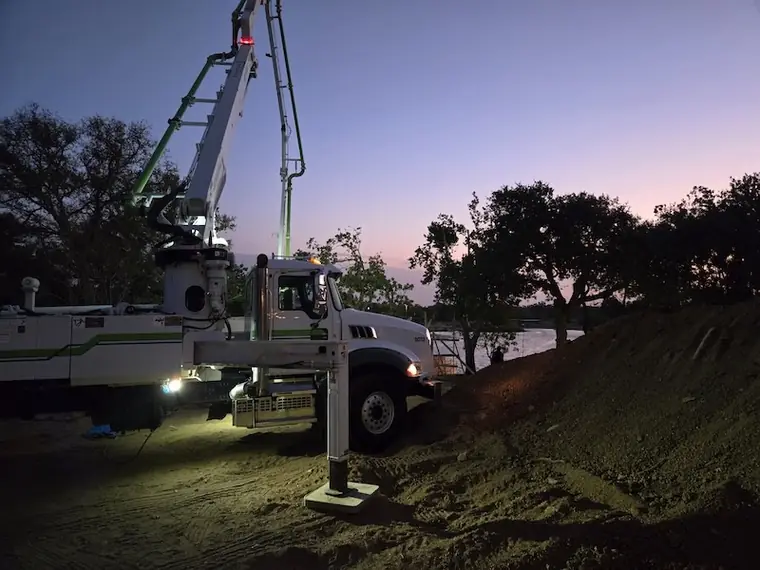
Every solid foundation starts below the slab. Across Austin and Central Texas, we clear, shape, and prepare your site so the ground is stable, drainage works, and every pour begins from an accurate, dependable baseline.
A foundation can only be as good as what it is sitting on. Put an engineered slab on a pad that was never properly compacted, or on fill with organic material buried in it, and the slab will faithfully follow the ground down as that material breaks down and consolidates. No amount of steel or post-tensioning compensates for a pad that keeps moving.
The same is true of water. Central Texas clay is stable when its moisture content is stable, and it moves when that swings — so where the site sheds water is not a landscaping question to settle at the end, it is a structural one to settle at the beginning. Sitework is the stage where both of those are still cheap to get right.
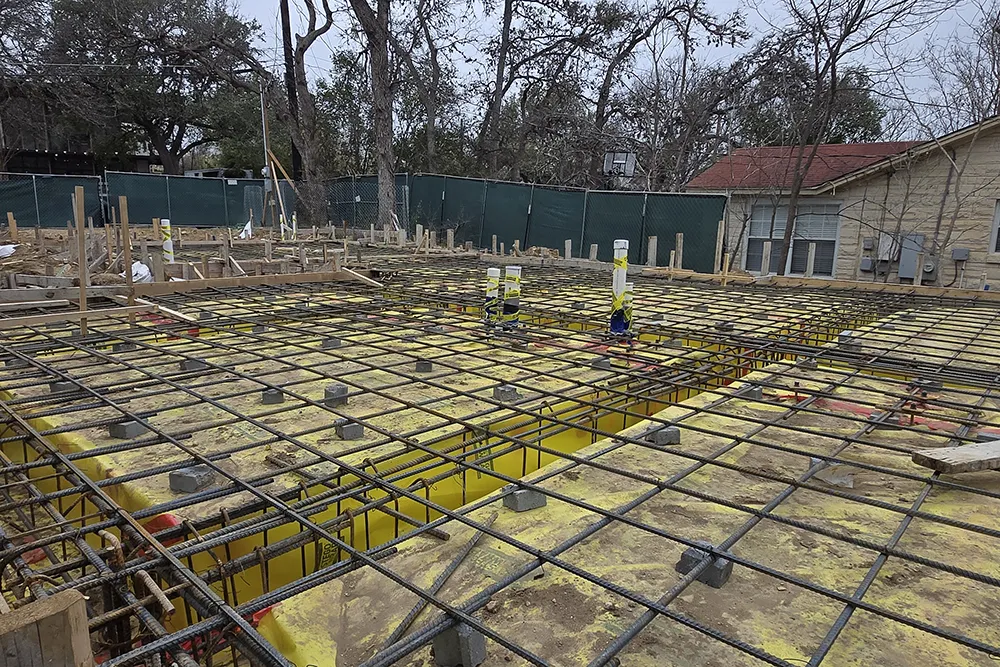
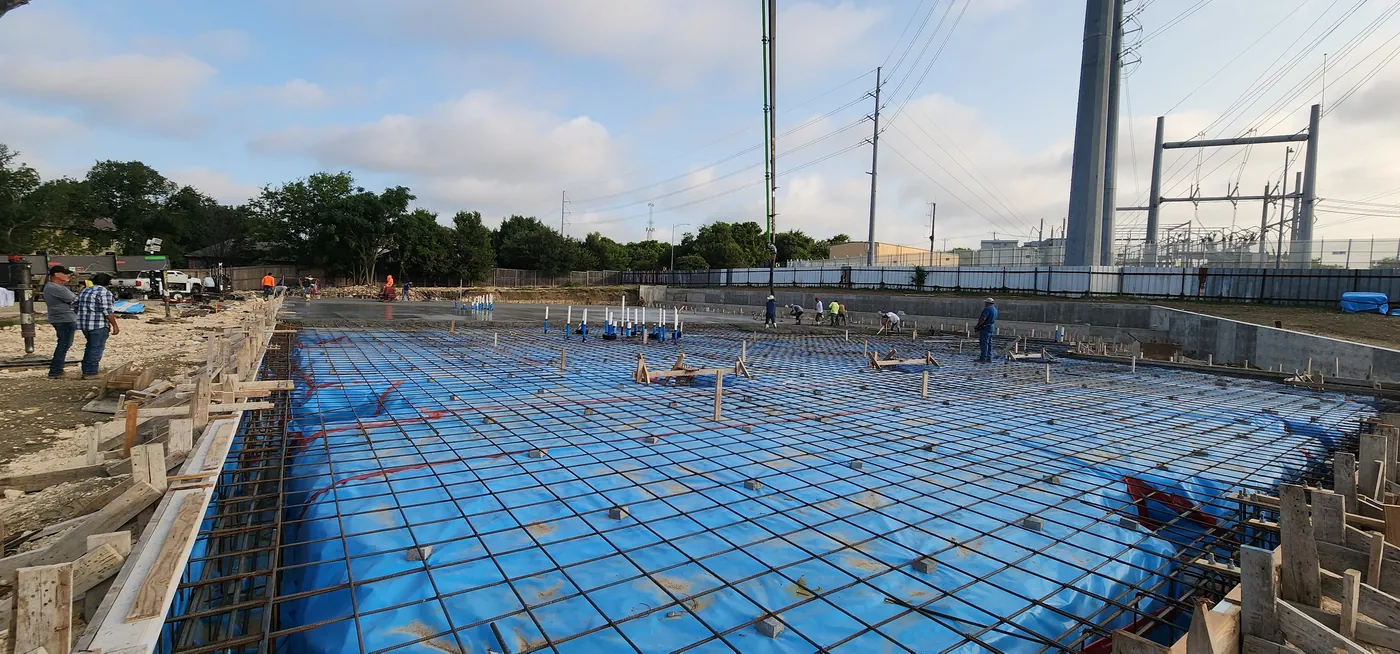
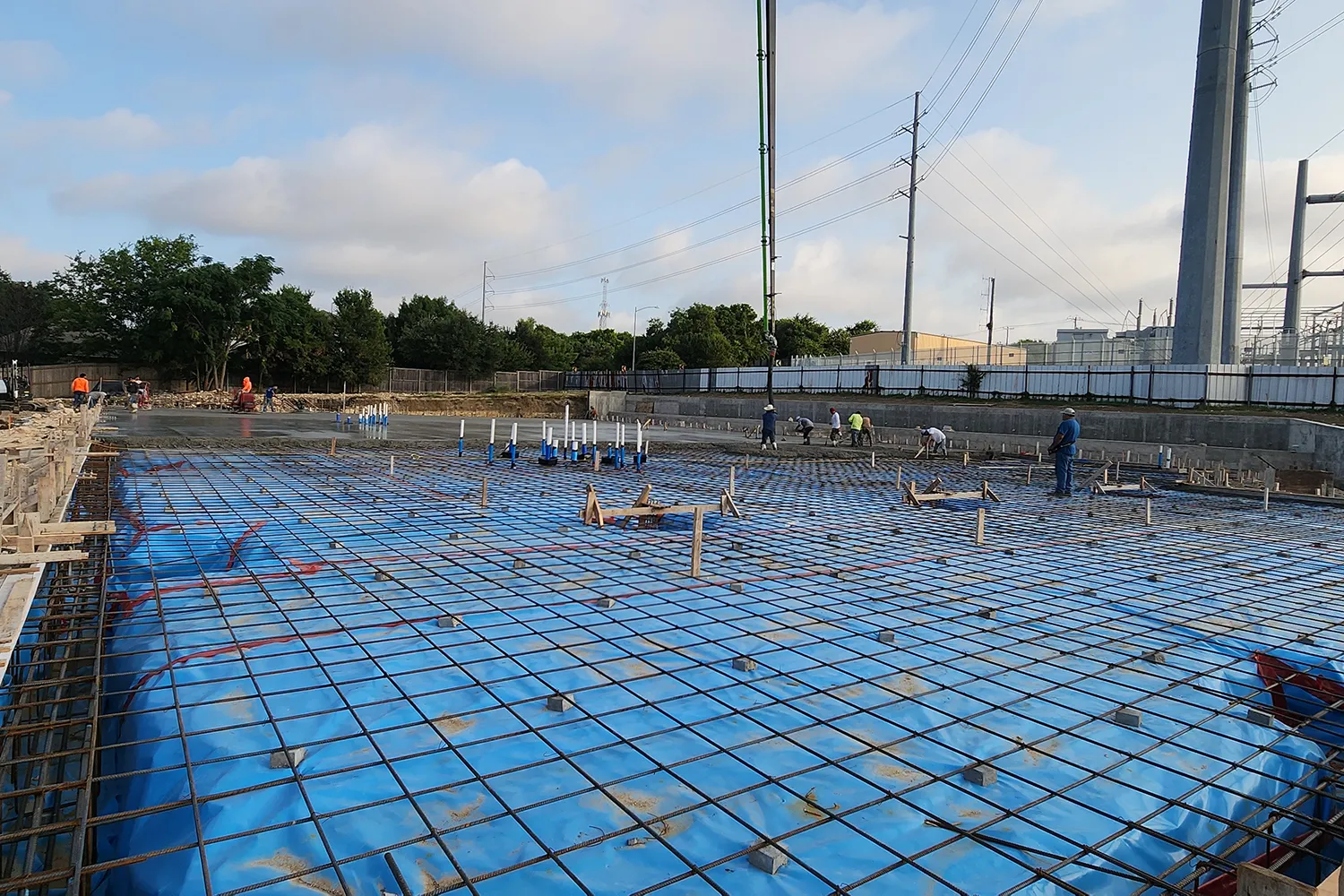
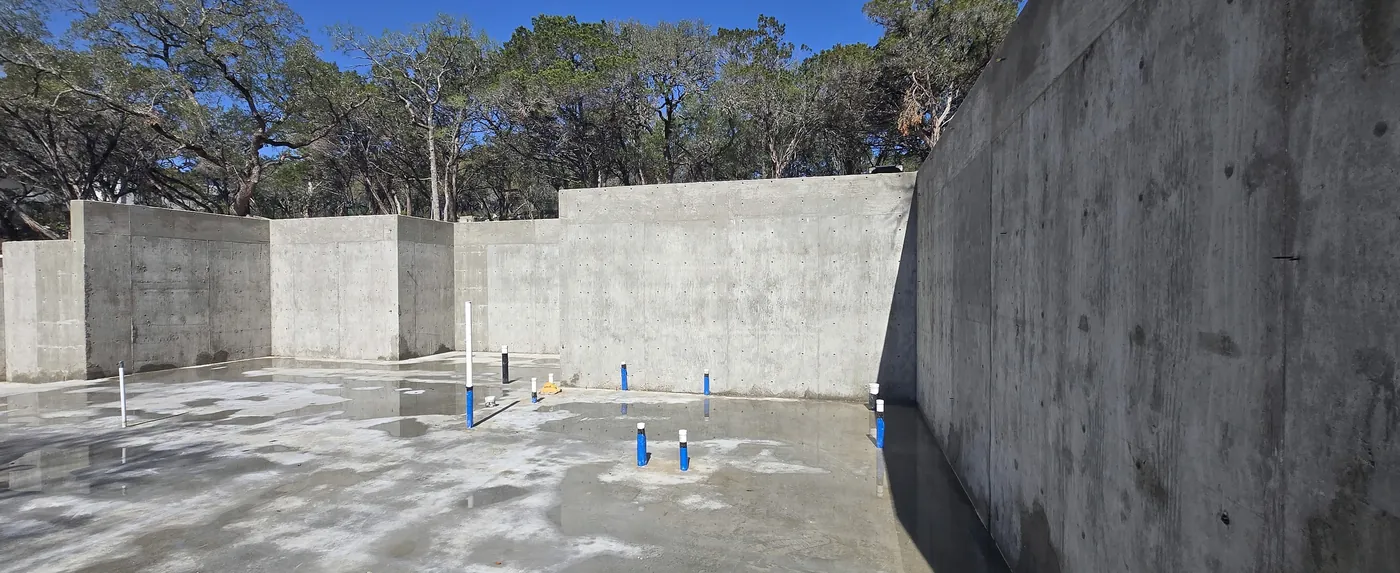
Austin protects its tree canopy aggressively, and land clearing is where that gets expensive if it is treated as an afterthought. Any tree of 19 inches diameter or more is a protected tree; oaks, pecans, elms, Texas ash, bald cypress, madrone, bigtooth maple and walnut become heritage trees at 24 inches. The critical root zone extends roughly a foot of radius for every inch of trunk diameter, and that zone constrains where machines can track, where spoil can be stockpiled and where the pad can go.
So on any lot with mature trees, protection fencing goes up before clearing starts, not after the first machine has already compacted the root zone.
Cut and fill, then compaction — and the compaction is the part that gets verified rather than assumed, because it is the part nobody can see once the slab is on top of it.
On sloped Central Austin lots the cut-and-fill balance is often the single biggest cost driver on the whole job — more than the concrete. Getting it modelled early means the number in the proposal reflects the site you actually have, rather than an allowance that moves once the machines arrive.
It is also where retaining structures get decided. A slope that could be held with a modest wall at design stage sometimes needs an engineered one by the time the pad has been cut, and that is a change order nobody enjoys.
Austin sits in one of the more flash-flood-prone parts of the country, and the city regulates development runoff accordingly. On many projects that means the site has to hold back stormwater and release it slowly rather than sending it straight to the street or the neighbour — which is what detention ponds and the associated structures are for.
Culverts, inlets and the outfall all have to be built to the drainage plan, at the invert levels the plan specifies. A detention pond that is an inch out at the outlet is not a detail; it is the difference between a system that works and one that gets rejected at inspection.
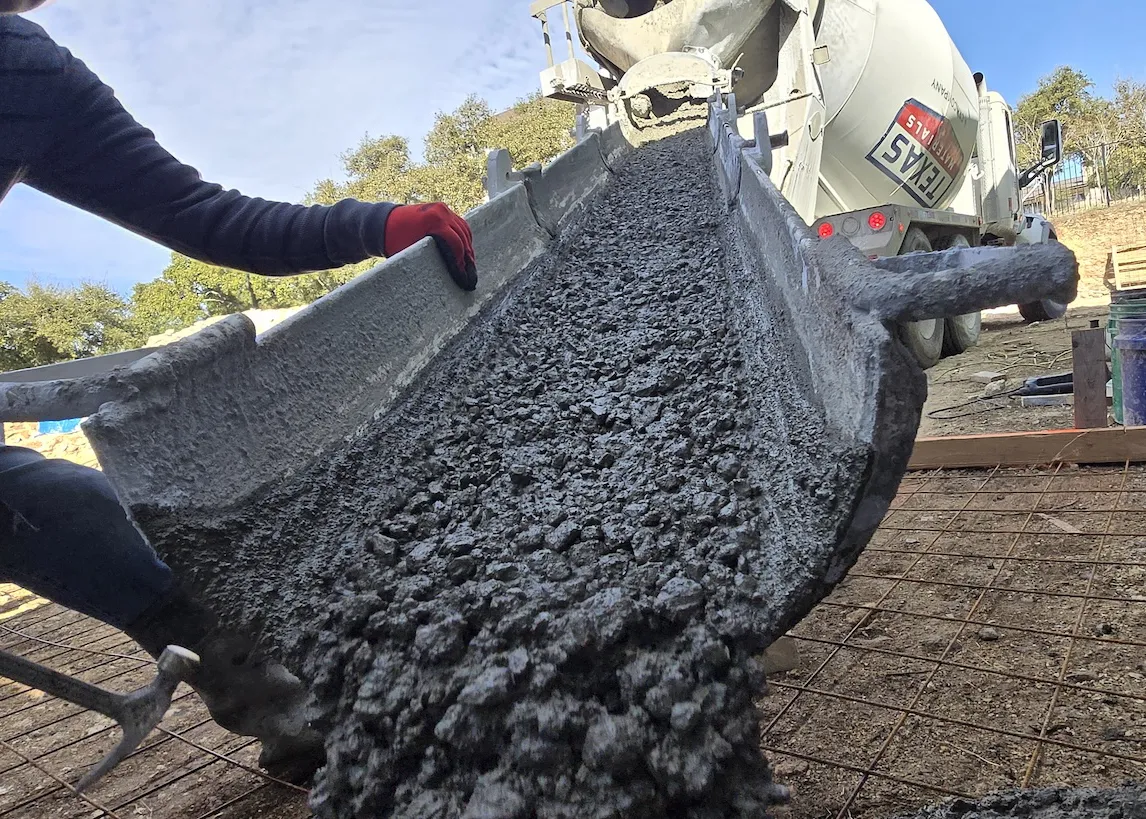
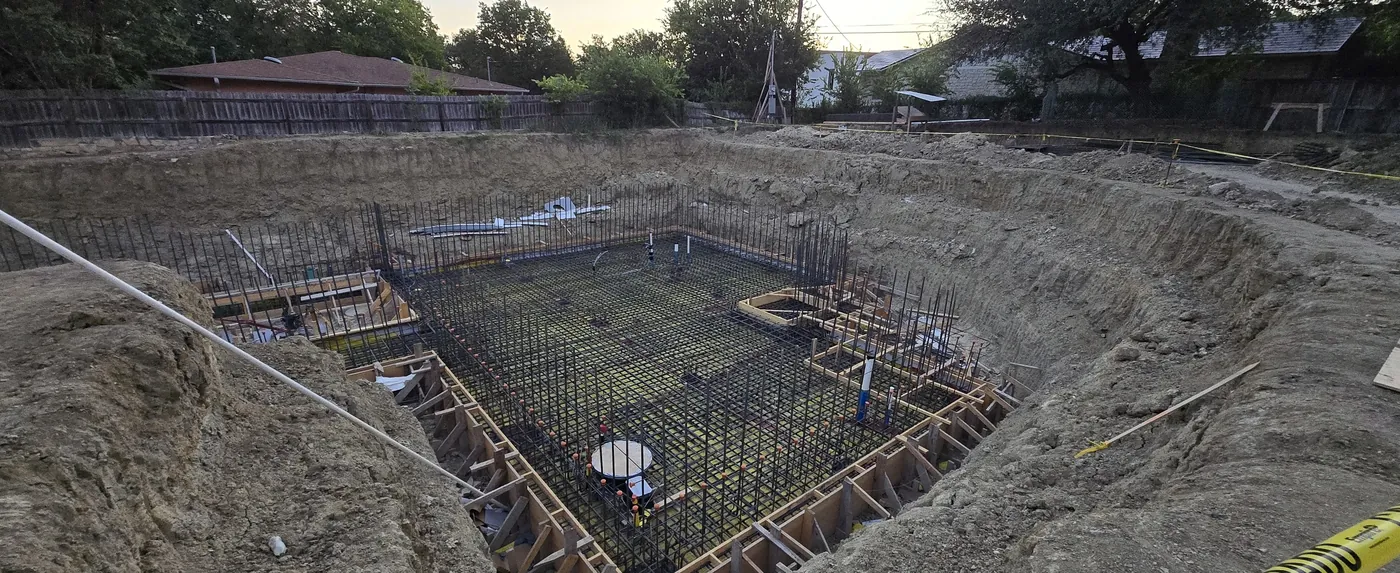
We clear trees, brush, and debris, then strip and grade your lot to the correct elevations—shaping the pad so water drains where it should and your foundation sits on stable, properly compacted ground.
We build detention ponds and install culverts that manage stormwater runoff and keep your site compliant with local drainage requirements.
Precise layout sets the tone for the entire build. We stake, form, and prep the site so every subsequent pour is accurate and on-spec.
Controlled lifts, moisture conditioning and density verification, so the pad under the slab behaves the way the foundation design assumes it will.
Silt fencing, inlet protection and stabilised access, installed at the start and maintained rather than added the day before an inspection.
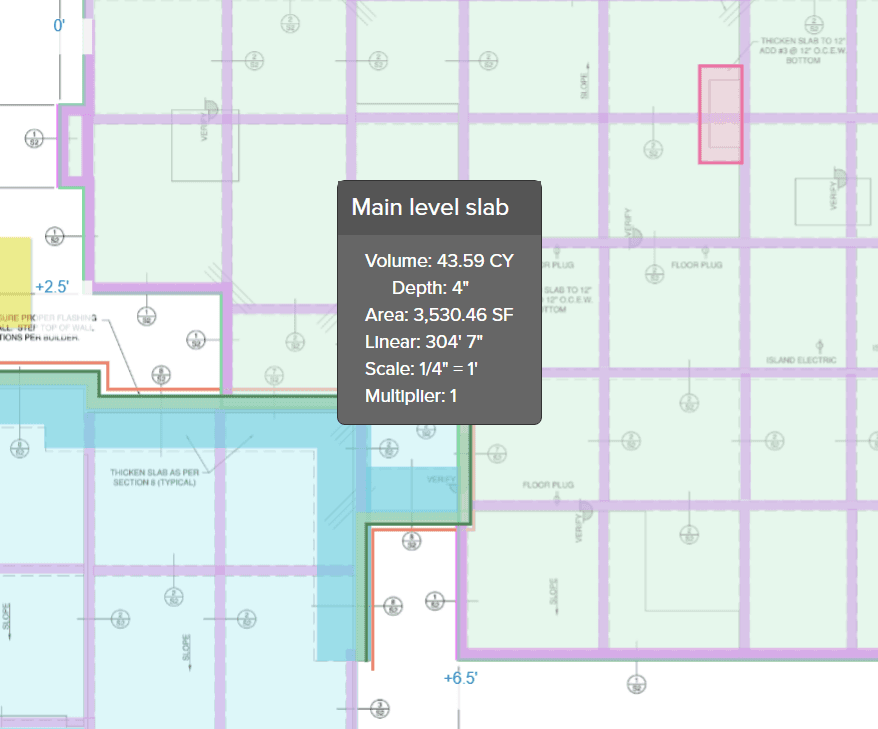
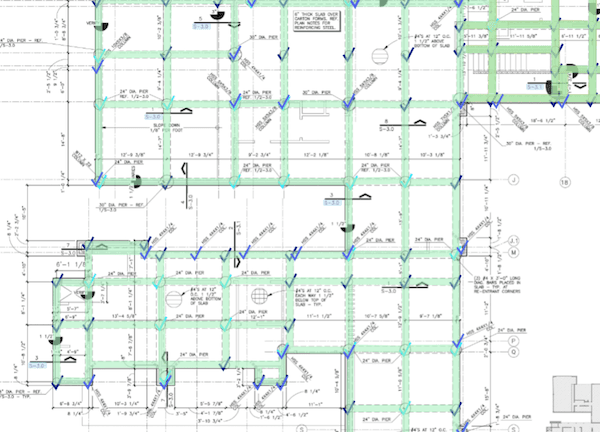
The advantage of having the same contractor do the sitework and the concrete is that the layout only gets set once. Pad elevations, building corners and finish floor levels come off the same drawings we will pour to, so there is no handover point where two crews' assumptions have to be reconciled — usually at the worst possible moment, with a concrete truck already scheduled.
It is the same reason our takeoffs cover the dirt and the concrete together. Sitework quoted as an allowance is where flatwork and foundation budgets quietly go wrong.
Cut and fill balance is often the single biggest cost driver on a Central Austin hillside lot — more than the concrete. Material that has to be moved, imported or hauled away, plus any retaining structure the new grade creates, is where the money goes. Modelling it early is what keeps it from becoming a change order.
No, and it is an expensive mistake. Trees of 19 inches diameter or more are protected in Austin, several species become heritage trees at 24 inches, and the critical root zone extends about a foot of radius per inch of trunk diameter. Protection fencing goes up before clearing starts, not after a machine has already tracked through the root zone.
Holding back stormwater and releasing it slowly, rather than sending the increased runoff from a developed site straight to the street or your neighbour. Where the drainage plan calls for one, its shape and the invert levels of the culverts and outfall are inspected against that plan.
Where the specification calls for it, yes — and it is worth having on record regardless. Compaction is invisible once the slab is on top of it, and a pad that was never properly compacted will consolidate under the foundation no matter how much steel is in the concrete.
Tell us about your lot and we'll put together a detailed, dependable proposal.
Get a Free Quote Today