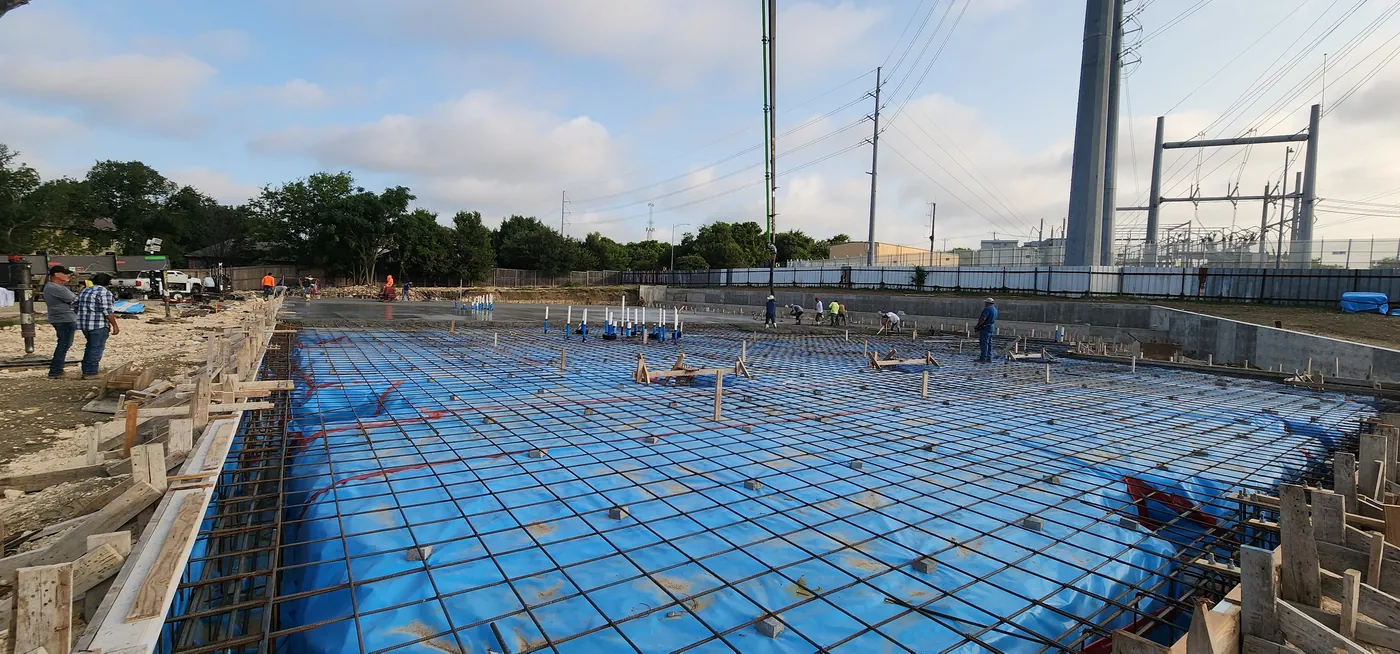
Work in the public right-of-way has to be done by a contractor the City licenses for it, and built to the city's standard details. DB Concrete holds that licence and pours curb, gutter, sidewalk and approach work across Austin and Central Texas.
Curb, gutter and sidewalk sit in the public right-of-way — the strip of land between the property line and the street that belongs to the City, not to the homeowner. Concrete work there is a different category from private flatwork. It needs a contractor registered and licensed by the City of Austin for right-of-way work, it needs the appropriate permit, and it gets inspected against the city's published standard details rather than against what looks right.
That is why a lot of otherwise capable concrete contractors stop at the property line. It is also, quietly, one of the more useful things about us on a residential job: the driveway, the approach and the sidewalk crossing can all be one scope with one crew, instead of a private contractor and a right-of-way contractor trying to meet in the middle of a single pour.
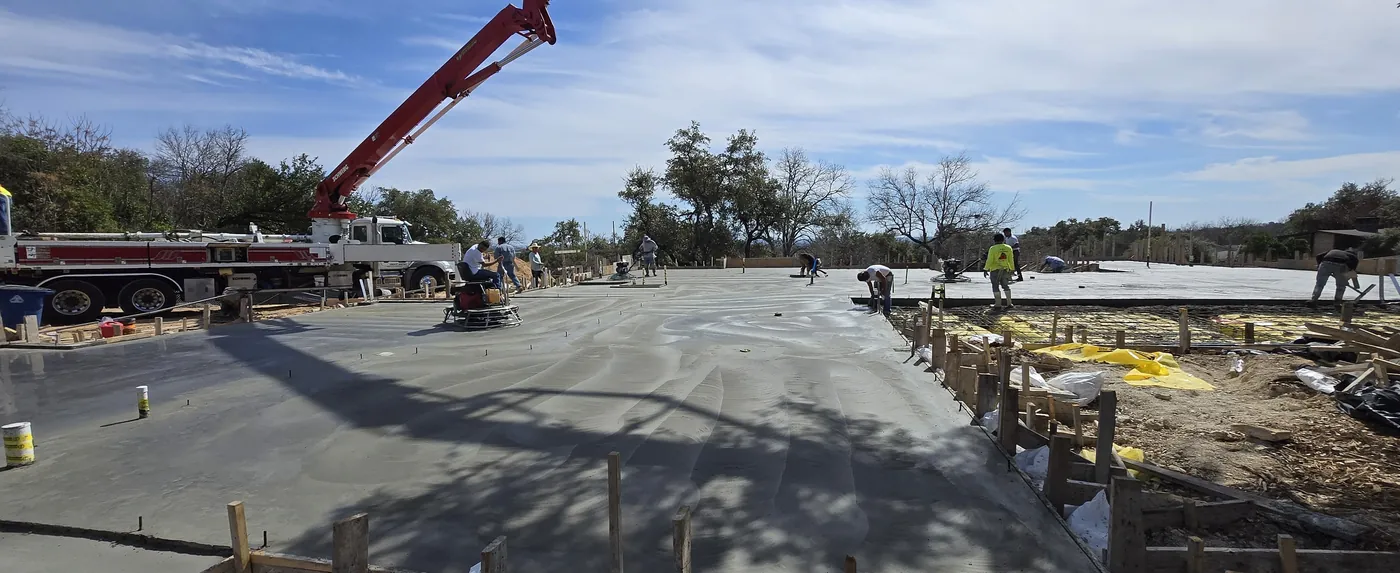
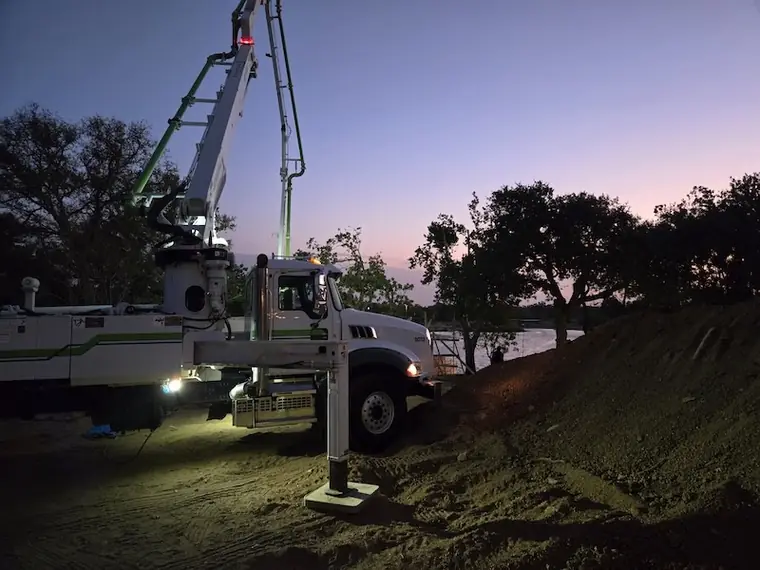
New and replacement curb and gutter poured to the city's standard profile, so the channel actually carries water instead of ponding along it.
Public sidewalk to city width, thickness and jointing, with the cross-slope held inside accessibility tolerances rather than eyeballed.
The transition from street to property, cut and formed to the standard detail and tied cleanly into the private driveway behind it.
Curb ramps with the running slope, landing and detectable warning surface the standard requires, built to pass inspection first time.
Removing and repouring failed, lifted or cracked sidewalk and curb — including the root pruning and subgrade correction that stops it happening again.
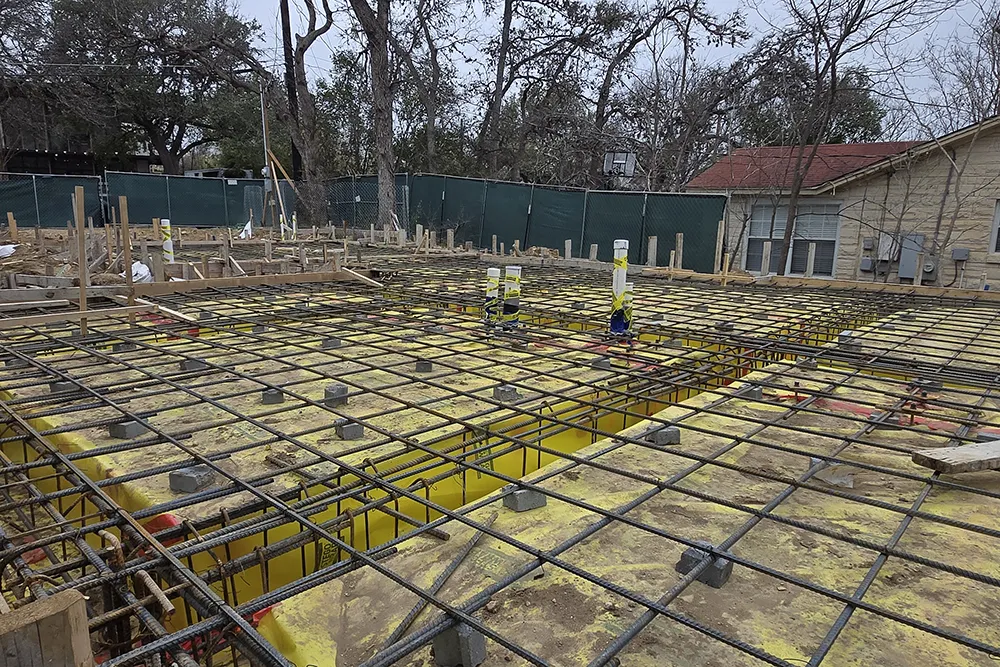
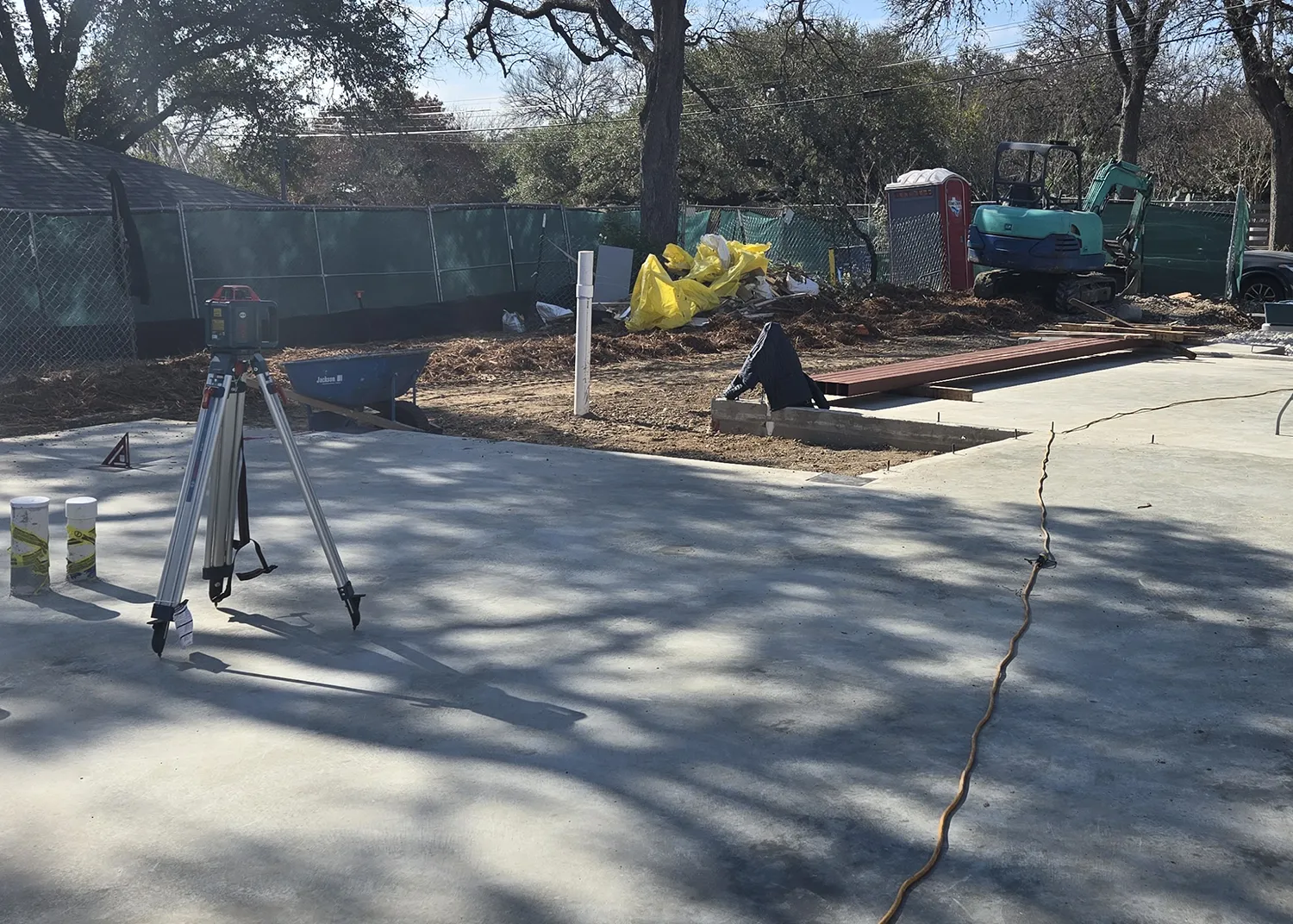
Right-of-way work is one of the few places in residential construction where the acceptance criteria are published and dimensional. Sidewalk cross-slope is the one that catches people most often — a public walkway has to stay within accessibility limits across its width, and a driveway approach crossing that walkway has to preserve them. A few degrees of extra fall to make the levels easier is exactly the kind of thing that fails an inspection and gets removed.
The rest is unglamorous and just as binding.
Most homeowners do not set out to build sidewalk. It arrives attached to something else.
The tree-root case is worth its own note, because it is very common in the older Central Austin neighborhoods where street trees and sidewalks have been sharing the same few feet for decades. Grinding the lip flat is a temporary answer. Repouring without addressing the root that lifted it just resets the clock.
Where the tree is protected — and in neighborhoods like Tarrytown and Clarksville it usually is — root pruning has limits, and the fix may be a redesigned panel or a slight realignment rather than a like-for-like replacement. That is a conversation to have before demolition, not after.
The frontage length, what is there now and what condition it is in, whether the scope is tied to a driveway or building permit, and whether there are protected trees in the way. We quote it from a measured takeoff alongside the rest of your flatwork, so the private and public sides of the job carry one number and one schedule.
Because it is not on your property. Curb, gutter and sidewalk sit in the public right-of-way, which the City of Austin owns and regulates. Work there requires a contractor the City licenses for right-of-way work, plus a permit, and it is inspected against published standard details. DB Concrete holds that licence.
Grinding the lip flat is a temporary fix. Repouring without dealing with the root that lifted it just resets the clock. Where the tree is protected — and in older Central Austin neighborhoods it usually is — root pruning has limits, so the answer is sometimes a redesigned panel or a slight realignment. That is a conversation to have before demolition.
Cross-slope, more than anything else. A public walkway has to stay within accessibility tolerance across its width, and a driveway approach crossing it has to preserve that. Adding a bit of extra fall to make the levels work is exactly the sort of thing that gets a pour removed.
Sometimes. New construction and substantial remodels can trigger a sidewalk obligation on the frontage, which is generally satisfied either by building it or by a fee in lieu. It is worth establishing which applies to your project early, because it affects both budget and the right-of-way permit.
Tell us what the project involves and we'll put together a detailed, dependable proposal.
Get a Free Quote Today