Foundations, driveways and flatwork poured on some of Austin's oldest and tightest residential lots. DB Concrete has spent 25+ years working the kind of mature, tree-covered, alley-fed sites that Tarrytown is made of.
Tarrytown was laid out as a subdivision in 1915 on land that had been part of the 365-acre estate of James Shaw, a 19th-century Texas State Comptroller. More than a hundred years of building has happened since, and it shows: a single block can hold a 1920s craftsman cottage, a 1930s Tudor, a 1950s ranch, a mid-century modern, and a brand-new custom home on a scraped lot.
For a concrete contractor that variety is the whole job. Original Tarrytown houses sit on pier-and-beam foundations raised above grade on concrete or cedar posts. Newer construction next door sits on slab. When you add an addition, a garage, a pool deck or a new driveway to a hundred-year-old house, the new concrete has to meet the old structure without fighting it — and it has to get poured on a lot that already has mature trees, utilities and a neighbor three feet off the property line. On a 1920s Tudor or a mid-century ranch the finish matters as much as the pour, which is where integral color, stamped concrete and pavers earn their place over plain gray flatwork.
Every neighborhood has its own set of constraints. These are the ones that shape almost every pour we do west of Lamar.
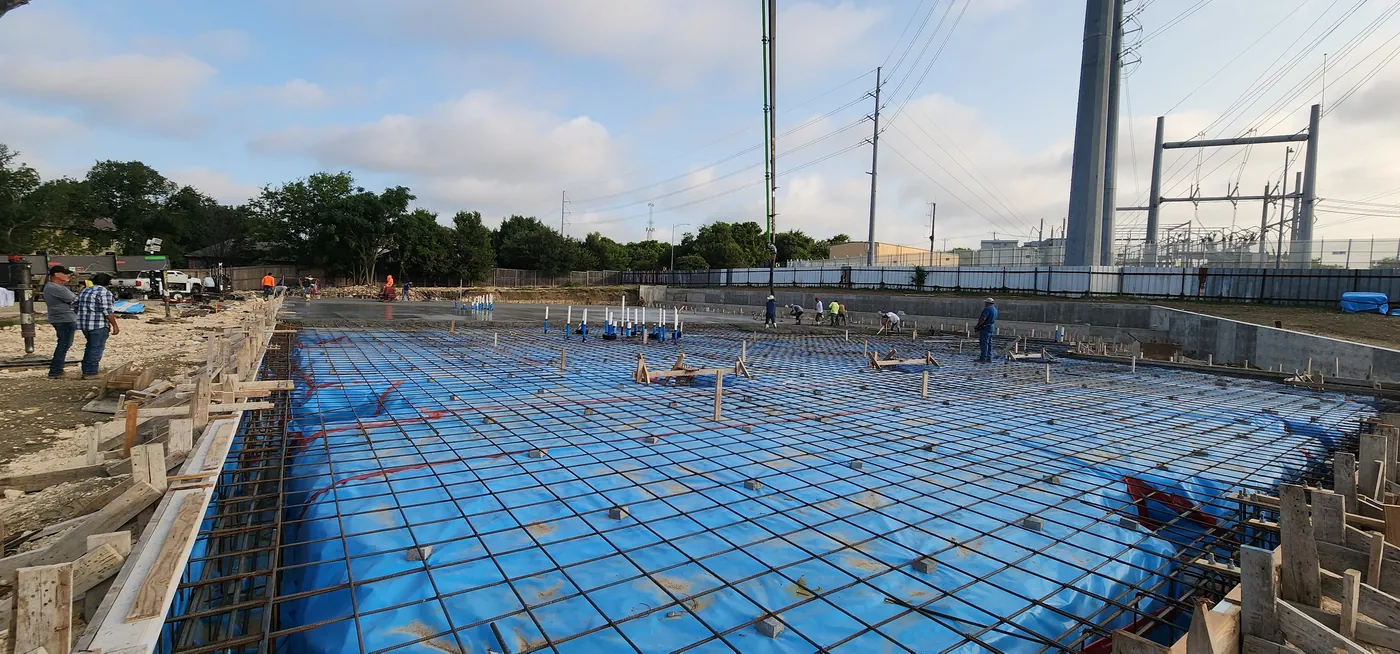
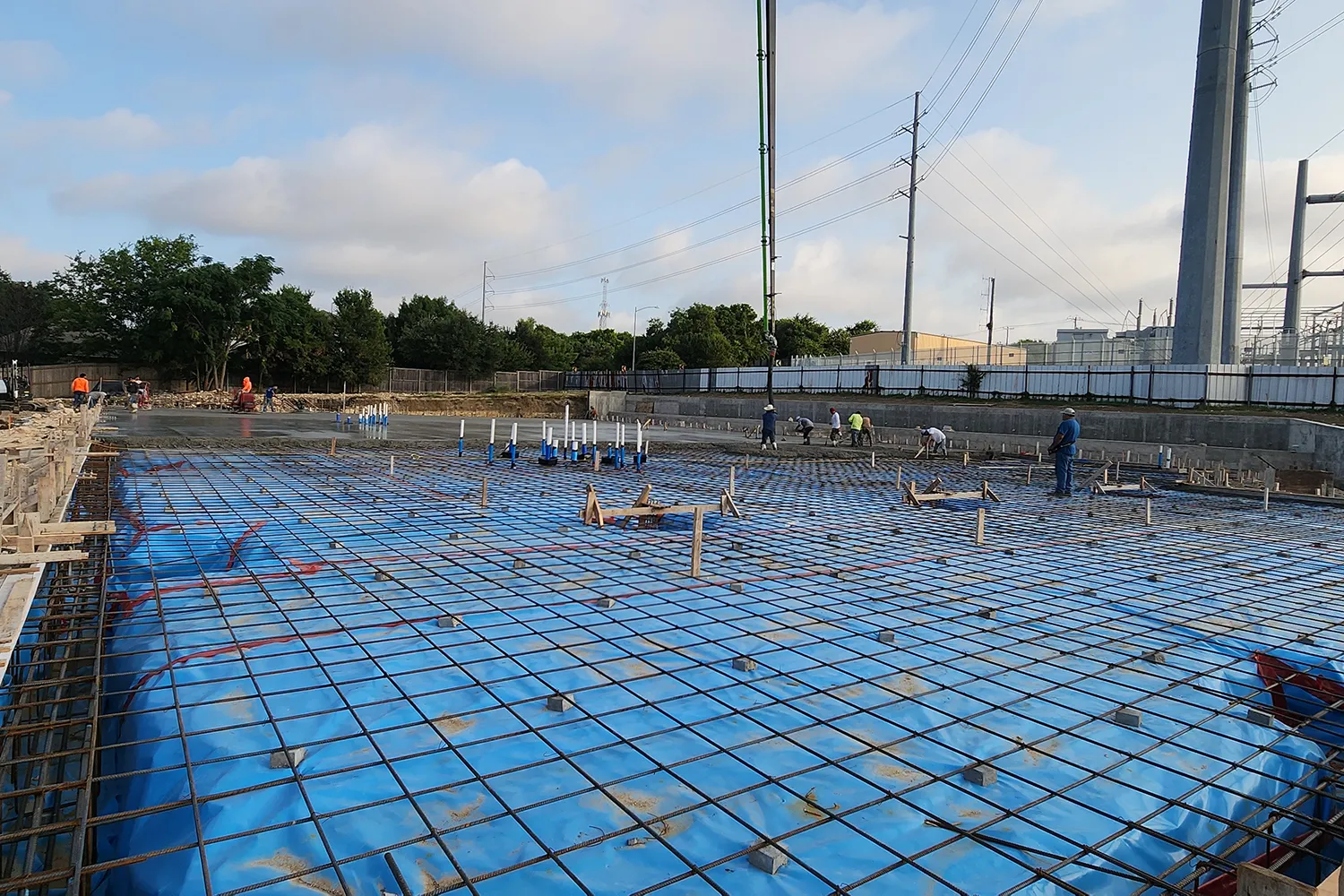
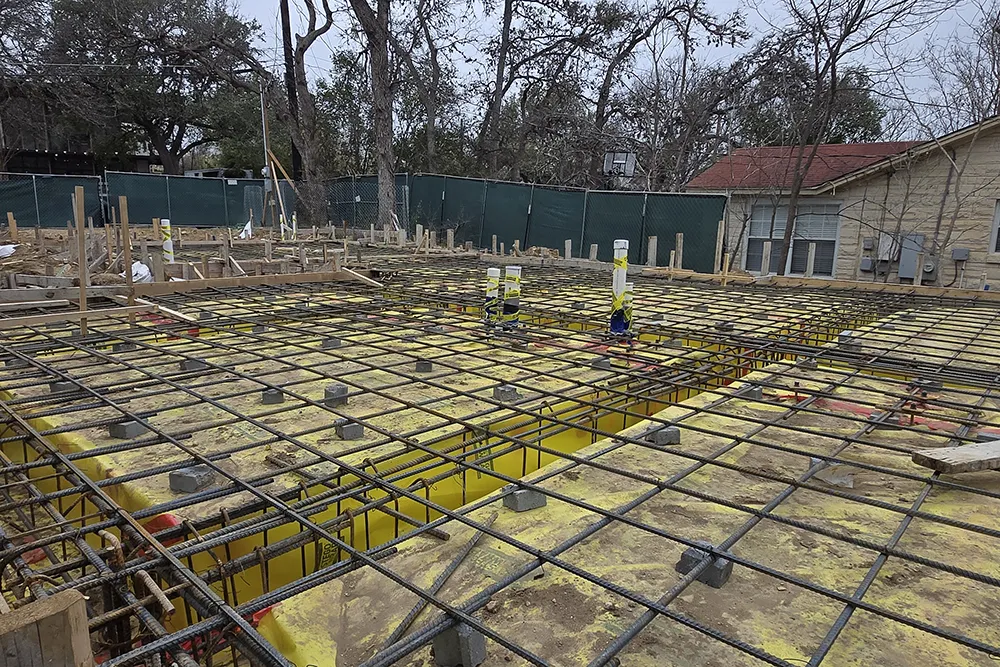
Tarrytown's tree cover is the reason people buy here, and the City of Austin protects it aggressively. Any tree 19 inches or more in diameter is a protected tree; oaks, pecans, elms, Texas ash, bald cypress, madrone, bigtooth maple and walnut become heritage trees at 24 inches. The critical root zone extends a foot of radius for every inch of trunk diameter, and violations of the tree ordinance can run up to $100,000 per tree.
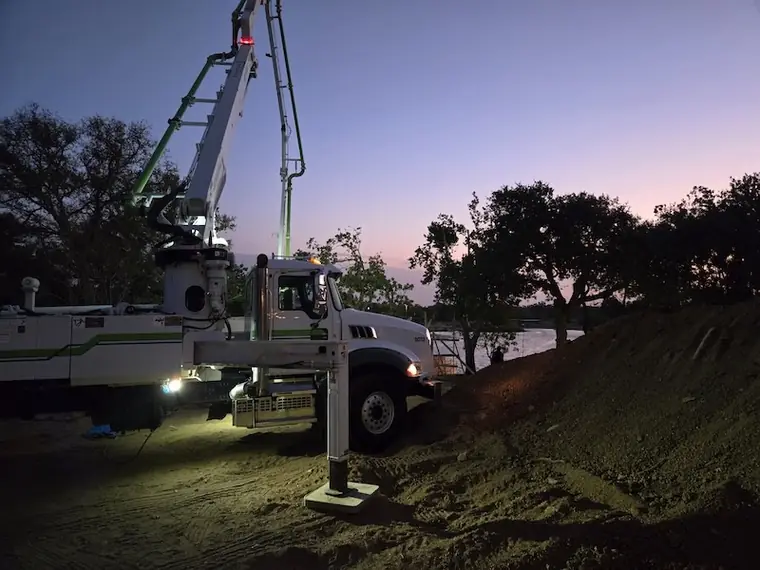
That is not a footnote on a Tarrytown job — it is the site plan. Protective fencing goes up before anything else moves, and the CRZ decides where the pump truck sets up, where the forms stage, and whether we can get a mixer down the alley at all.
Replacing a Tarrytown driveway usually means touching the approach, the curb and the public sidewalk — all of which sit in the City of Austin right-of-way. That work requires a ROW permit, and the city requires the contractor performing it to hold a Right-of-Way Contractor License backed by insurance and a $10,000 bond. Subcontractors who touch the right-of-way have to be named on the permit and licensed too.
DB Concrete is a registered City of Austin Right-of-Way contractor. We pull the permit, pour the approach to city standard detail, and handle the sidewalk and curb work as part of the same scope — instead of leaving you to find a second licensed contractor halfway through the job.
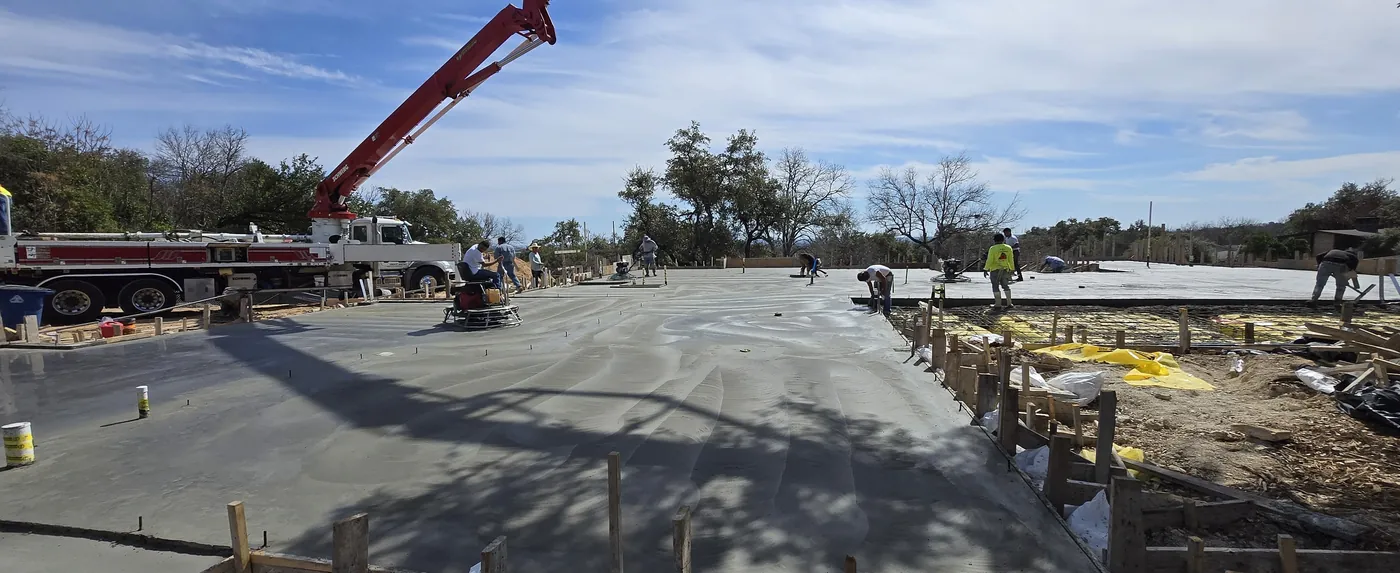
We look at access, trees, existing foundation type, and where water currently goes before we quote anything.
An accurate takeoff from estimating software updated quarterly for material and labor pricing — no guesswork, no surprise change orders.
ROW permitting where the scope requires it, plus coordination with your builder, arborist and other trades.
Precise placement and finish, a clean site at the end of it, and a walkthrough to confirm the work meets your expectations.
"James has always gone above and beyond on our projects. Fair pricing and communication is why I keep on using them."
"DB Concrete has been accurately installing our foundation designs for over 10 years. DB Concrete takes pride in their craft and it shows in their work. They always go that extra mile to make things 'right'."
"Precision starts before we ever step foot on the job site. Accurate takeoffs eliminate guesswork and help our clients budget confidently."
Tell us what you're building and we'll put together a detailed, dependable proposal — including what the trees, the access and the right-of-way are going to require.
Get a Free Quote Today