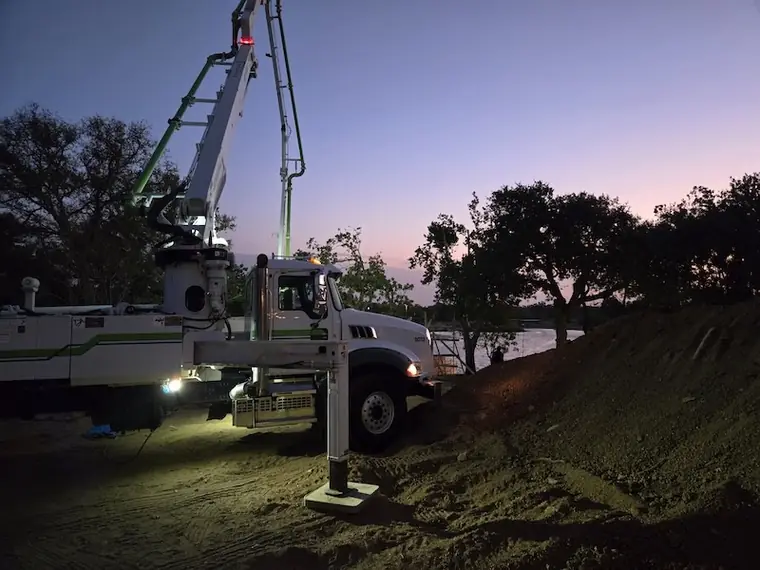
Clean lines, correct slope, and finishes that hold up. From driveways to sidewalks and patios, DB Concrete's flatwork is poured to spec and built to last across Austin and Central Texas.
A residential driveway in Austin is legally two jobs. The part on your property is ordinary private flatwork. The part between the property line and the street — the approach, and any sidewalk or curb it crosses — sits in the public right-of-way, and work there has to be carried out by a contractor the City of Austin licenses for right-of-way work. DB Concrete holds that licence.
The practical difference is whether your driveway is one project or two. Contractors without the licence stop at the property line, which leaves you sourcing a second contractor for the last few feet, coordinating two schedules across one pour, and living with a cold joint and a colour change where the two meet. We pour it as a single scope, with one crew and one finish, from the garage slab to the street edge — including the curb, gutter and sidewalk it crosses.
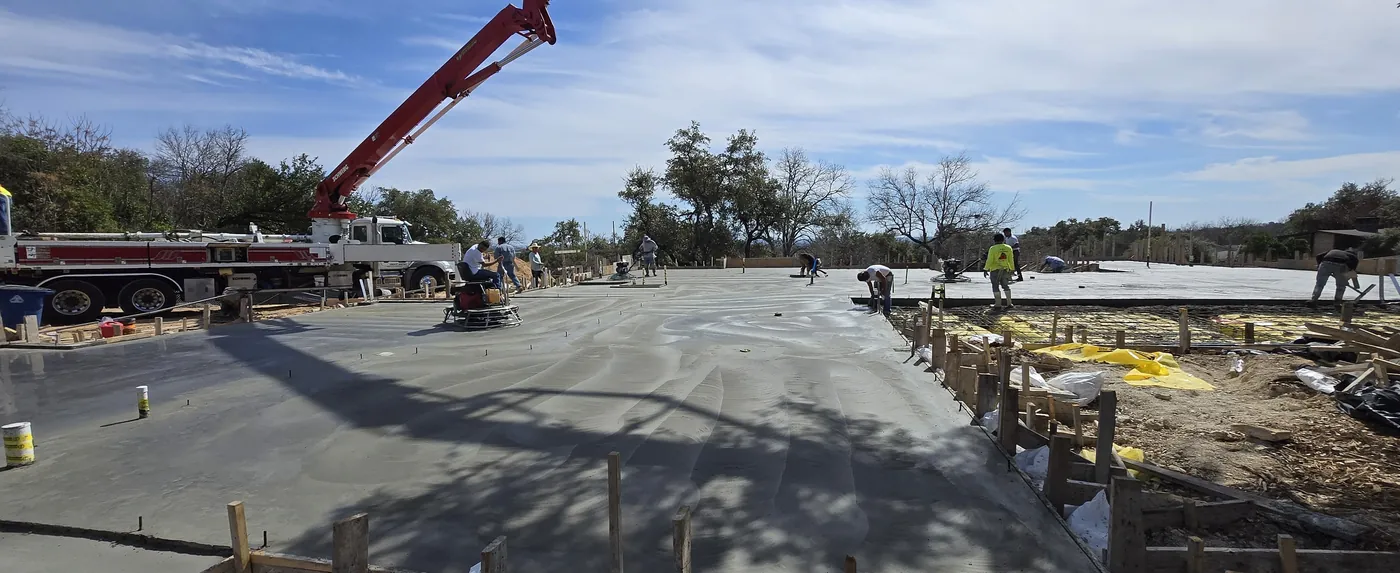
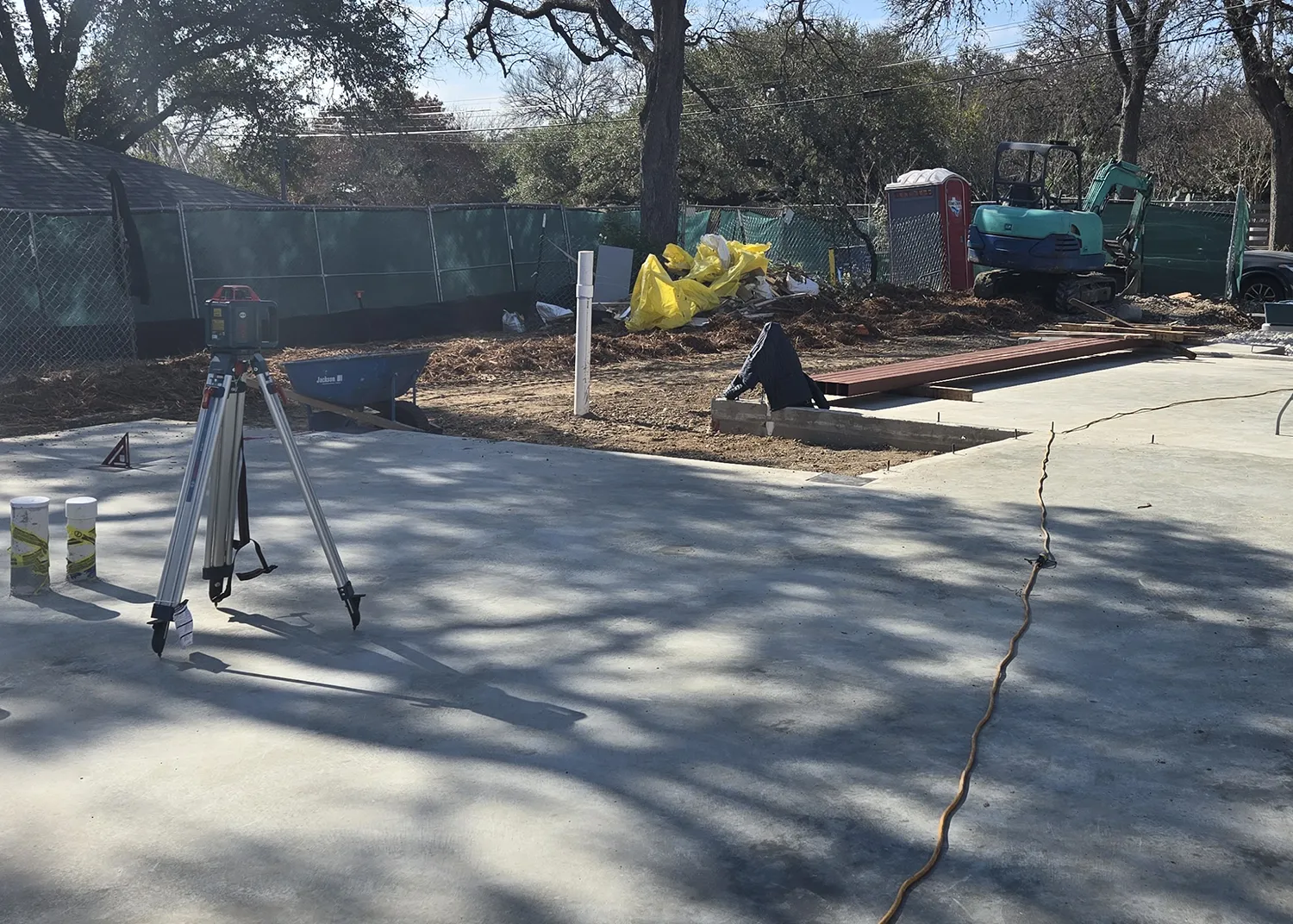
Driveway work is one of the more heavily regulated things you can do to a residential lot in Austin, and most of the constraints are easier to design around than to discover afterwards.
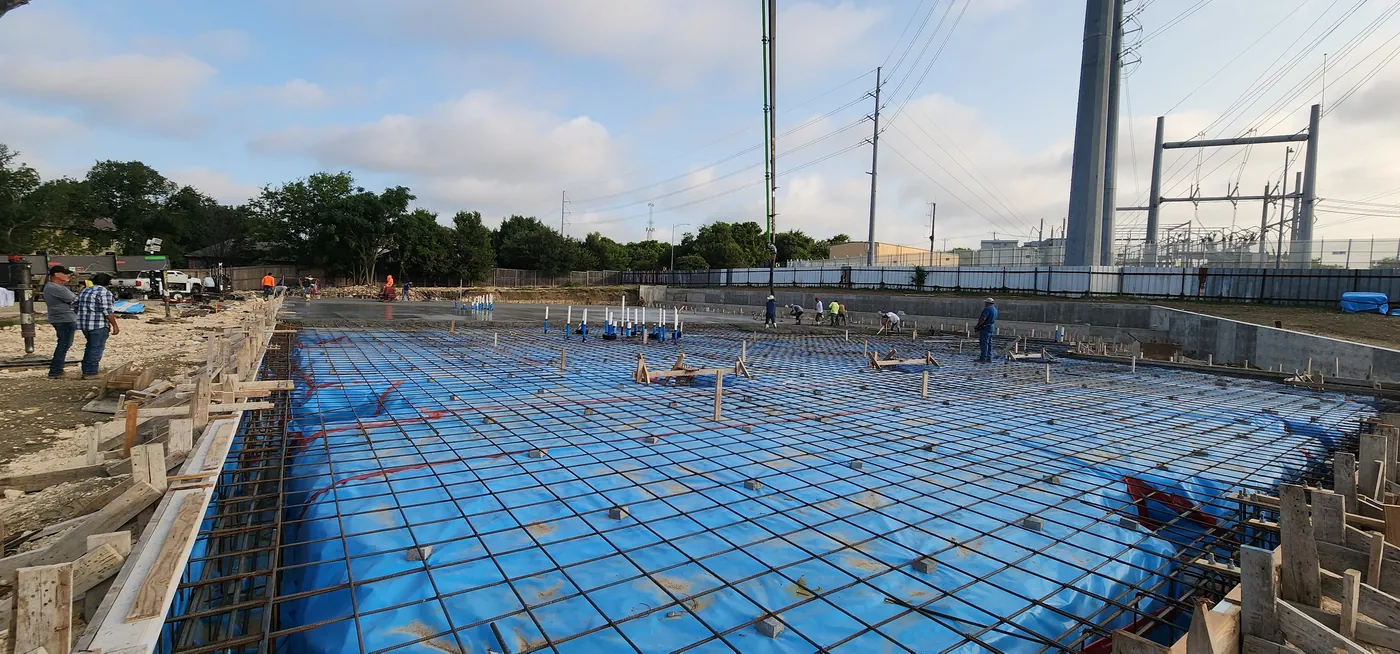
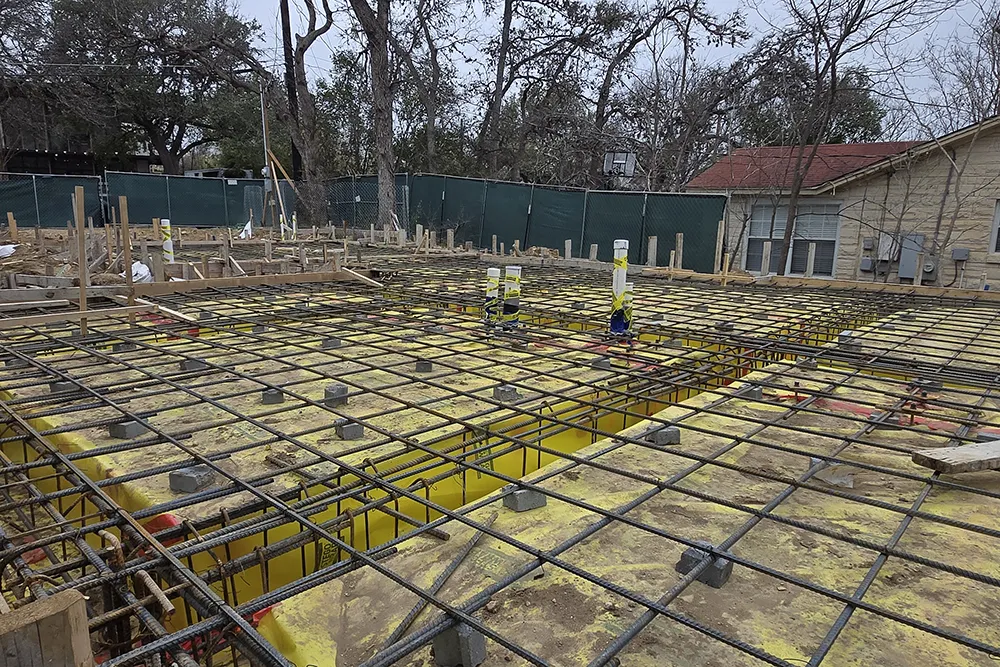
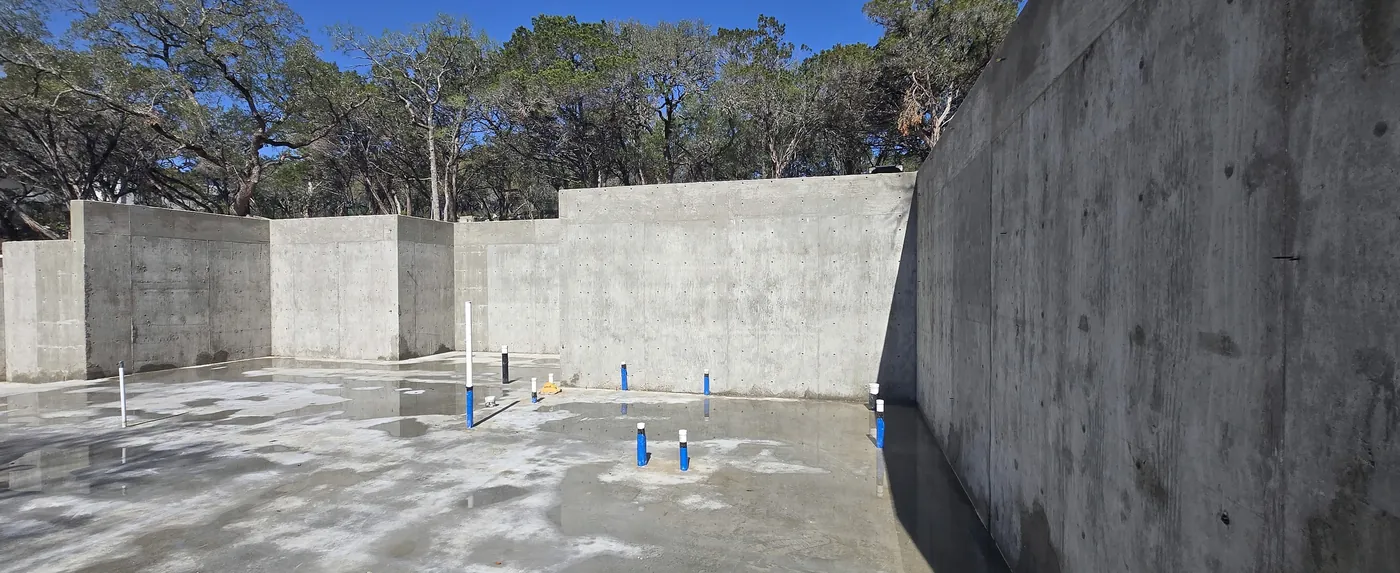
When a driveway cracks, settles or ponds water, the cause is nearly always something that happened before the concrete arrived. Soft or uncompacted subgrade lets one area settle while the rest stays put. Organic material or fill left in place keeps compressing for years. On Austin's clay, a slab poured over ground that swells and shrinks will find its own joints if you have not given it any.
None of that is exotic — it is just work that is invisible once the pour is done, which is exactly why it gets skipped by people bidding to a number.
As a registered City of Austin Right-of-Way contractor, we pour driveways and approaches that meet city specifications and stand up to daily use.
Properly sloped curb, gutter, and sidewalk work that channels water correctly and finishes off your property's exterior with clean, durable lines. More on right-of-way work →
Functional, great-looking patios poured to last—whether it's a simple slab or part of a larger outdoor living space.
Front walks, side yard paths and garage approaches, tied into the driveway so levels and joints line up rather than fight each other.
Removing failed flatwork, correcting the subgrade underneath it, and repouring—rather than laying new concrete over the reason the old slab failed.
A broom finish is the default for good reason: it grips when wet, it hides the ordinary marks a driveway collects, and it needs almost nothing from you afterwards. Exposed aggregate trades a little of that simplicity for texture and a more natural look. Where a driveway is a design element rather than a utility — a front court, a motor court, anything the house looks out onto — integral colour, stamping or banding is worth the extra maintenance.
Worth knowing before you choose: decorative surfaces on a driveway carry the heaviest wear of any flatwork on the property, and they need resealing on a cycle. A broom-finished drive with a decorative apron or border is often the sensible compromise — the look sits where people see it, and the workhorse surface takes the tyres.
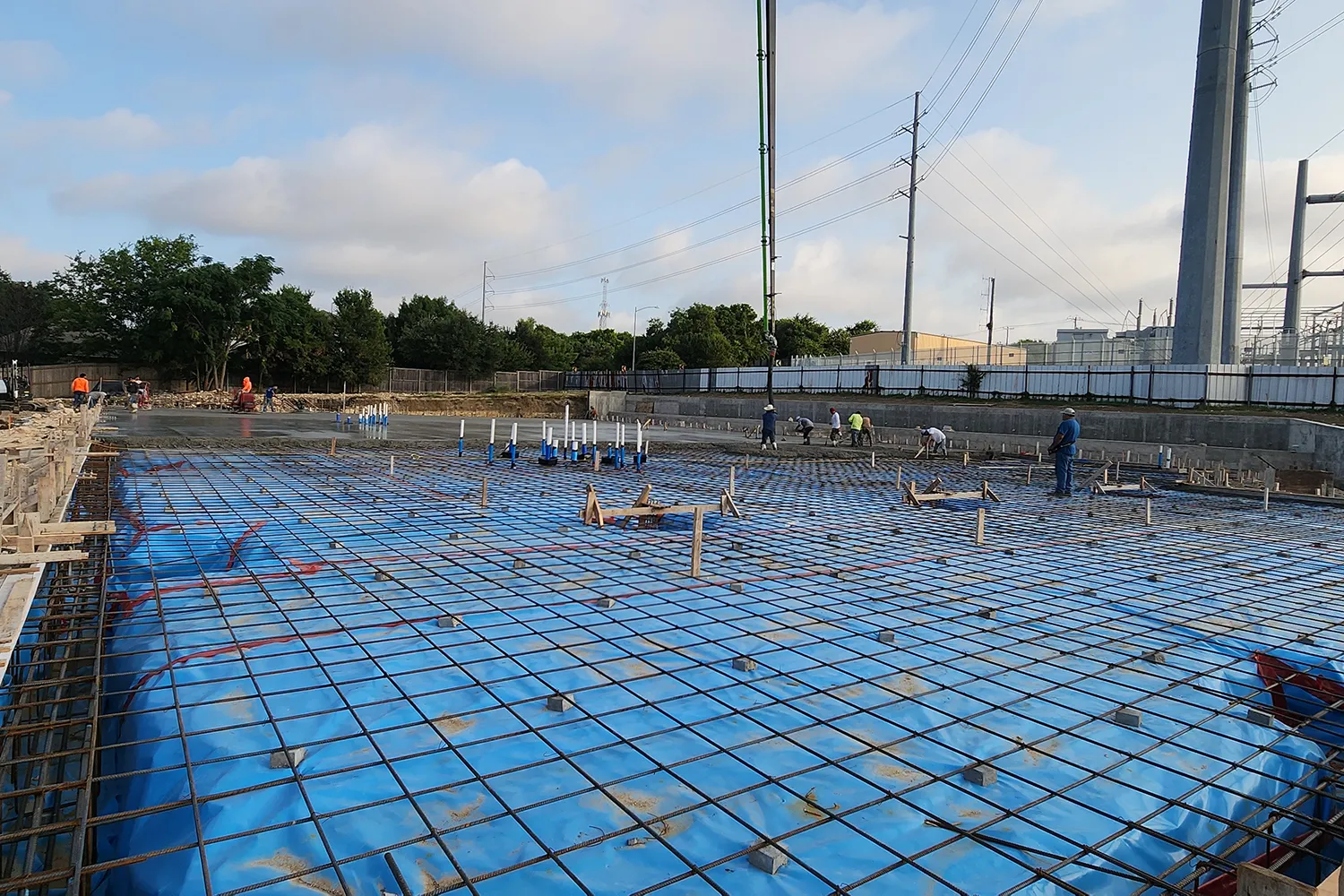
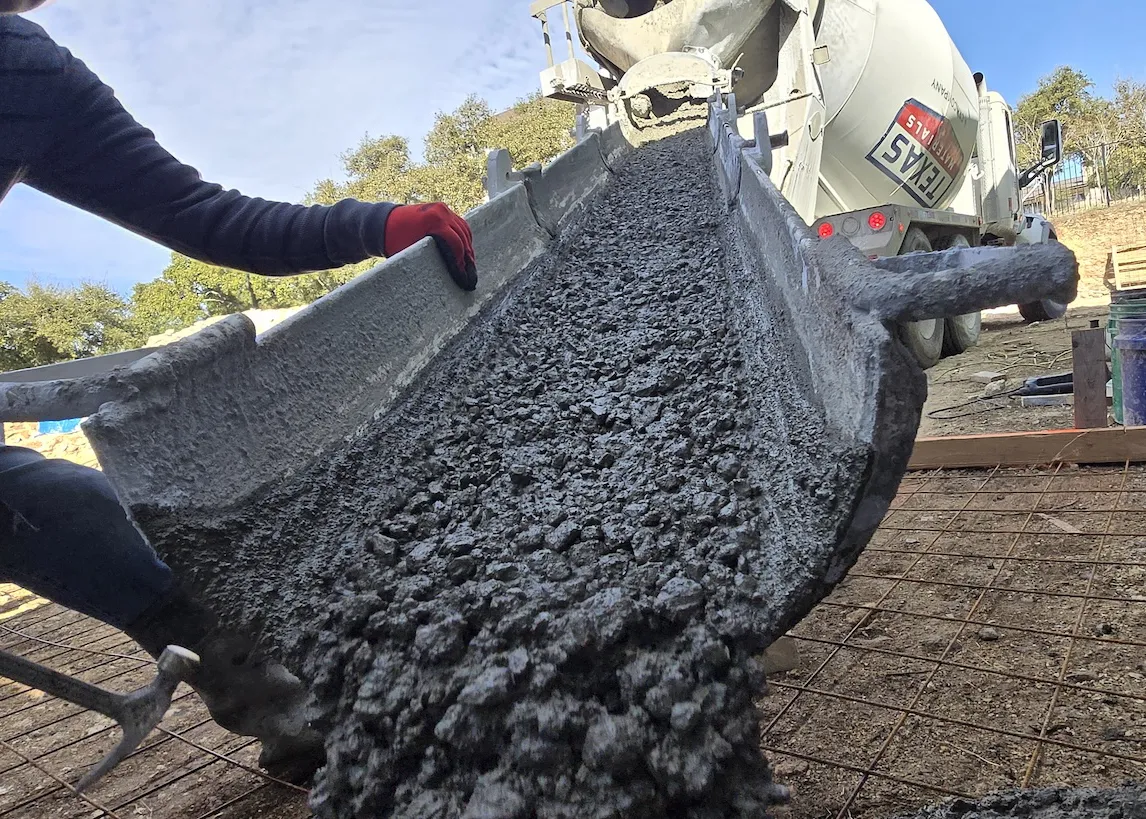
Enough to give you a number that holds: the area and its shape, what has to come out first, whether the scope crosses into the right-of-way, and what the lot's remaining impervious cover allowance is. We quote from a measured takeoff rather than a rate per square foot, because the tear-out and the subgrade are usually where the real variation sits.
Around seven days for normal cars. Wait the full 28 days before parking anything heavy or letting a delivery or moving truck onto it. You can walk on it after a day or two.
If the work touches the public right-of-way — the approach, the curb cut, or a sidewalk crossing — then yes, and it has to be done by a contractor the City of Austin licenses for right-of-way work. We hold that licence, so the private and public halves of the driveway can be one permit-compliant scope.
Almost always something below the slab. Uncompacted or organic-laden subgrade settles unevenly, and a slab poured without adequate control joints on Austin clay will crack where it wants to rather than where you put a joint. Repouring without correcting the subgrade just resets the clock.
Austin caps impervious cover on residential lots, and the driveway, walkways, patio and pool deck all count toward the same allowance. It is worth checking the remaining allowance before designing the driveway rather than after.
Tell us what you're planning and we'll put together a detailed, dependable proposal.
Get a Free Quote Today