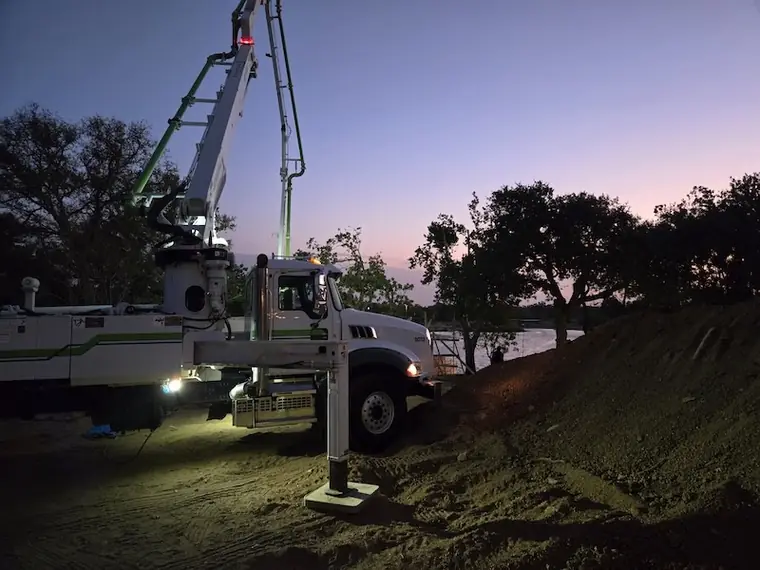
One of the few Austin neighborhoods built with sidewalks and paved streets from day one — which means a lot of its original concrete is now approaching a century old. DB Concrete replaces it properly, permit and all.
Pemberton Heights launched in 1927 as a low-density suburban subdivision — and unlike most of Austin at the time, it arrived finished: paved and shaded streets, sidewalks, city services and private parkland from the start. It was developed by the Enfield Realty and Home Building Company, formally announced in 1916, and platted in twelve sections between the 1920s and the early 1940s.
The architecture follows that timeline: Tudor Revival, Colonial Revival, Classical Revival, Spanish Colonial Revival, Italian Renaissance Revival, Craftsman and Prairie School, with more than forty homes designated as historic landmarks. Pemberton Castle at 1415 Wooldridge Drive — a Gothic Revival conversion begun in 1925 — is the neighborhood's best-known landmark. Pemberton Heights is part of the Old West Austin Historic District, listed on the National Register in 2003. In front of houses like these a replacement drive rarely wants to be plain gray, which is why integral color and pavers come up on most of the motor courts we pour here.
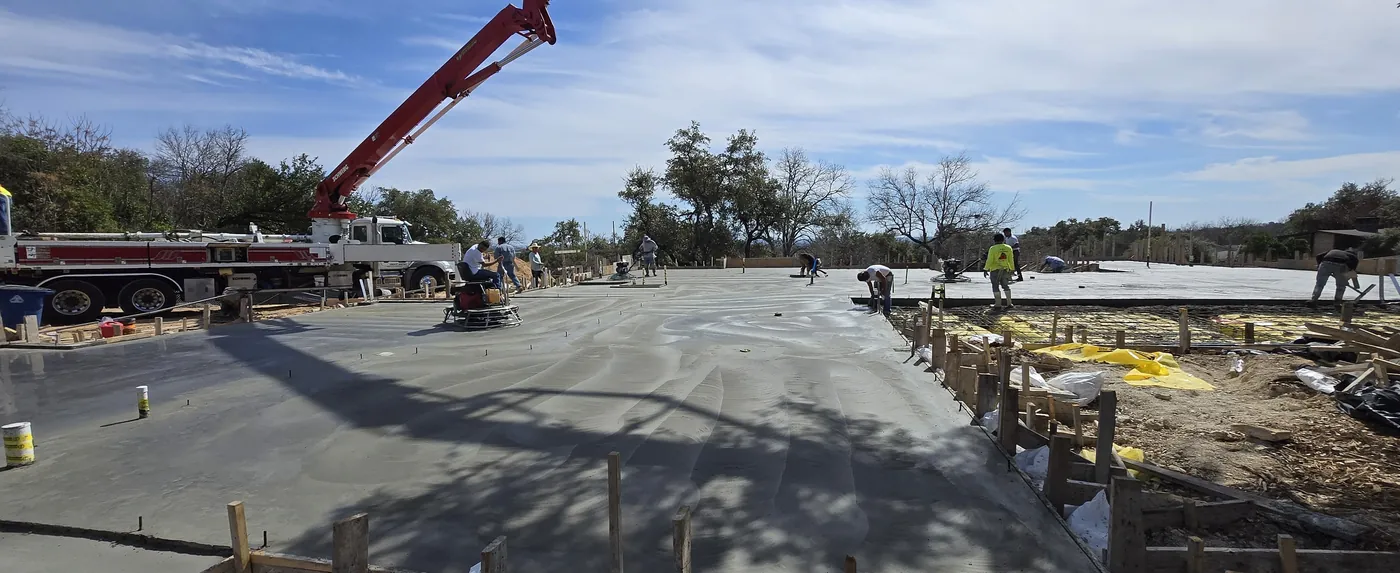
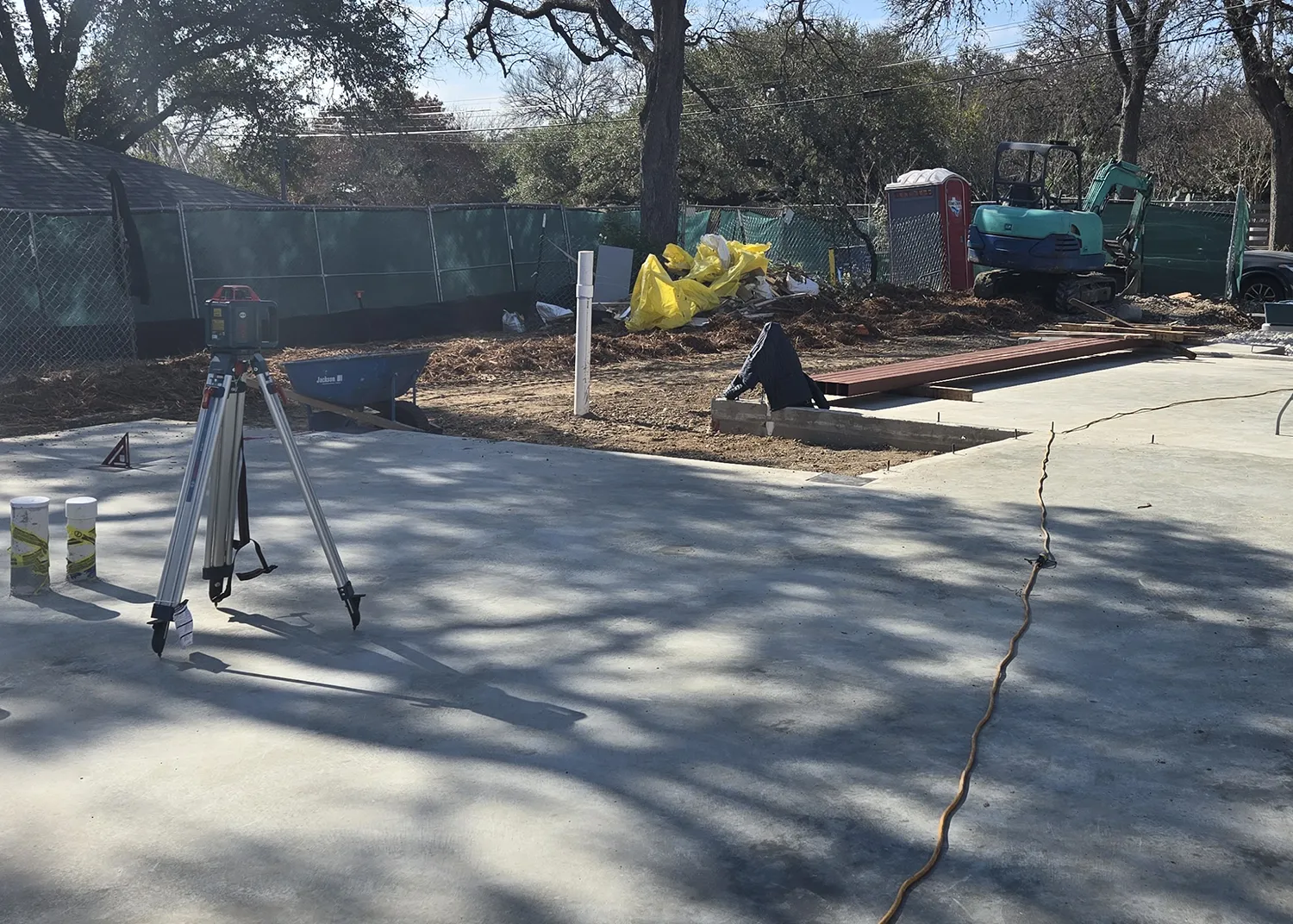
Ninety-plus years of service is a long life for a sidewalk. Most of the work here is replacement, not new construction.
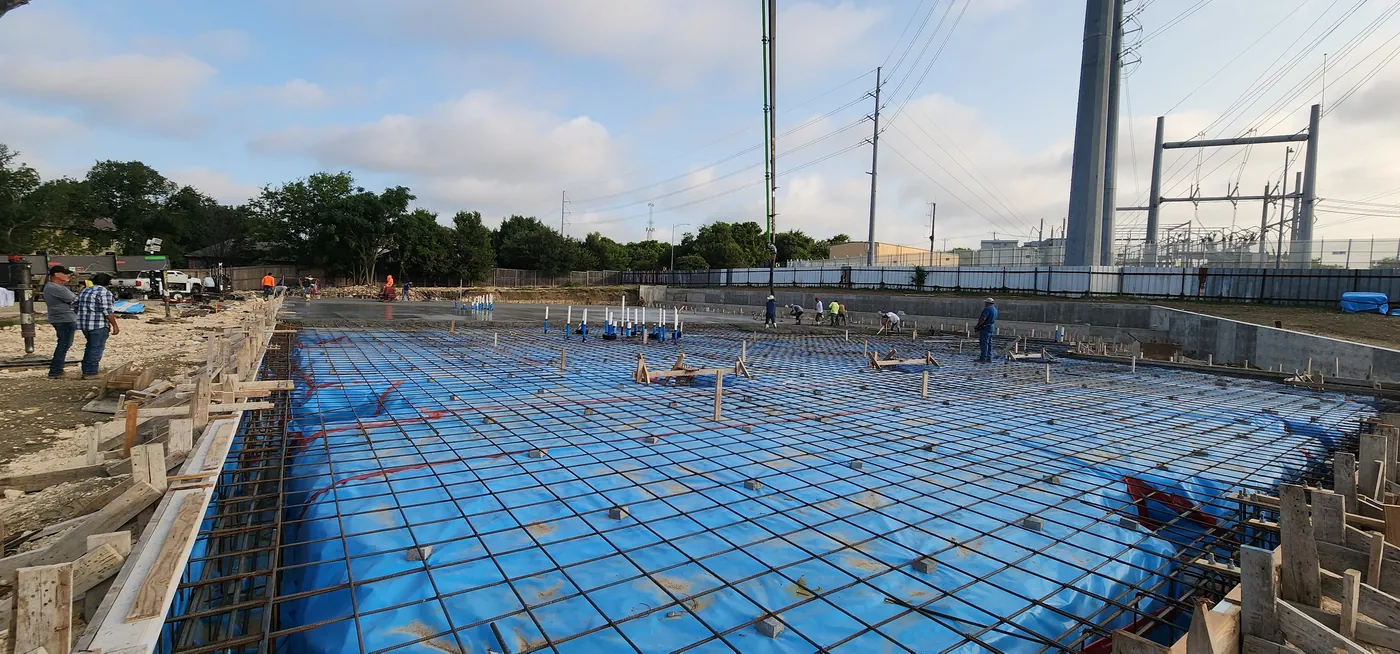
Sidewalk, curb, gutter and driveway approach work in Pemberton Heights happens in the City of Austin right-of-way, and it requires a ROW permit. The city requires the contractor performing that work to hold a Right-of-Way Contractor License, backed by insurance and a $10,000 bond — and any subcontractor touching the right-of-way has to be named on the permit and licensed too. City standard details govern the sidewalk and approach dimensions, and the work cannot interfere with existing trees.
DB Concrete is a registered City of Austin Right-of-Way contractor, so this is a single scope with a single crew instead of a permitting problem you have to solve yourself.
Shaded streets were part of the original 1927 sales pitch, and those trees are now protected. In Austin any tree 19 inches or more in diameter is protected; oaks, pecans, elms, Texas ash, bald cypress, madrone, bigtooth maple and walnut become heritage trees at 24 inches. The critical root zone extends one foot of radius per inch of trunk diameter, protective fencing must be installed before work begins, and tree ordinance violations can reach $100,000 per tree.
When a street tree has lifted a sidewalk panel, the fix is a coordination problem as much as a concrete problem. We plan the removal, the root zone, the grading around it and the replacement pour together.
We establish exactly where your property ends and the city's right-of-way begins, because that determines the permit.
An accurate takeoff priced from estimating software updated quarterly for current material and labor costs.
We pull the ROW permit and schedule around the street, the trees and your neighbors.
City standard detail where it applies, the finish you chose where it does not, and a clean site at the end.
"James has always gone above and beyond on our projects. Fair pricing and communication is why I keep on using them."
"DB Concrete has been accurately installing our foundation designs for over 10 years. DB Concrete takes pride in their craft and it shows in their work. They always go that extra mile to make things 'right'."
"We don't just pour slabs — we lay the foundation for excellence."
Driveway, sidewalk, patio or foundation — we'll scope the right-of-way, pull the permit, and give you a proposal you can budget against.
Get a Free Quote Today